EXOPLANETS
What is an Exoplanets?
An exoplanet (or extrasolar planet) is a planet that orbits a star other than our Sun, that is to say outside our solar system. Here are some key points about exoplanets :
Discovery and Detection
- Detection methods : Exoplanets are mainly detected by two methods :
- Transit method : When an exoplanet passes in front of its star, it briefly decreases its light, creating an identifiable light curve.
- radial velocity method : A star can show variations in its speed because of the gravity of an orbiting exoplanet, detected by the Doppler effect.
- other methods : Direct imaging, gravitational microlensing, and the pulse duration variation method.
Characteristics of the Exoplanets
- diversity : Exoplanets vary greatly in size, composition, and orbit type. Some may be similar to Jupiter (gas giants), while others are similar to Earth (rocky).
- habitable zones : Some exoplanets are in the "habitable zone" of their star, where conditions can be favorable for the presence of liquid water and potentially life.
importance and impact
- Study of planetary formation : The discovery of exoplanets helps scientists understand the formation of planetary systems and test theories about the evolution of stellar systems.
- Search for the extraterrestrial life : Exoplanets in habitable areas are primary targets in the search for biosignatures or signs of life.
additional resources
- databases : Databases such as NASA’s Exoplanet Archive and the Exoplanet Encyclopedia list the exoplanets discovered.
- Instruments : Missions like the Kepler Space Telescope and the James Webb Space Telescope are crucial for the detection and study of exoplanets.
Some Remarkable Exoplanets
- Proxima Centauri b : One of the closest exoplanets to Earth, orbiting Proxima Centauri, the closest star to the Sun.
- TRAPPIST-1 System : A system with seven Earth-sized planets, many of which are in the habitable zone.
Exoplanet research is a dynamic part of modern astronomy, promising exciting discoveries about the nature of planets and solar systems beyond ours.
The different types of exoplanets
Exoplanets are incredibly varied in size, composition and environment, reflecting a wide range of conditions that may exist in the universe. Here is an overview of the different types of exoplanets known :
1. Rocky Planets (Telluric or Terrestrial)
Description
- Composition : Mainly composed of rocks and metals.
- Examples : Earth, Mars, Venus, Mercury.
- Atmosphere : Varies considerably, from dense (like Venus) to tenuous (like Mars).
- Surface : Solid with mountains, craters, volcanoes.
Characteristics
- Size : Typically up to 1.5 times the radius of the Earth.
- Mass : From 0.5 to 5 land masses.
Examples of Exoplanets
- Proxima Centauri b : Located in the habitable area of Proxima Centauri.
- TRAPPIST-1 : One of the planets of the TRAPPIST-1 system, potentially rocky and in the habitable zone.
2. Super-Earth
Description
- Composition : Mixture of rocks, metals, and sometimes ice.
- Examples : Planets larger and more massive than Earth but smaller than the gas giants.
Characteristics
- Size : Between 1.5 and 2 times the radius of the Earth.
- Mass : From 5 to 10 land masses.
- Atmosphere : May vary from dense to thin; some may have a thick atmosphere similar to that of Neptune.
Examples of Exoplanets
- Kepler-452b : Bigger than Earth, in the habitable zone of its star.
- 55 Cancri e : Close to its star, with extremely high surface temperatures.
3. Ice Planets or Mini-neptunes
Description
- Composition : Mainly hydrogen, helium, and ice (water, ammonia, methane).
- Examples : Uranus and Neptune in our solar system.
Characteristics
- Size : 2 to 4 times the radius of the Earth.
- Mass : From 10 to 20 land masses.
- Atmosphere : Dense, composed of hydrogen and helium with traces of ice and methane.
Examples of Exoplanets
- GJ 1214 b : A mini-neptune with a thick atmosphere composed mainly of water or hydrogen.
4. Hot Jupiter
Description
- Composition : Mostly hydrogen and helium, similar to Jupiter but much warmer.
- Examples : Exoplanets very close to their star.
Characteristics
- Size : Generally between 0.8 and 2 times the radius of Jupiter.
- Mass : From 0.3 to several masses of Jupiter.
- Atmosphere : Extremely high temperature, often with strong winds and various chemical compositions.
Examples of Exoplanets
- HD 209458 b (Osiris) : One of the first hot Jupiters discovered, famous for its evaporating atmosphere.
- WASP-12b : Very close to its star, with temperatures up to 2500°C.
5. Cold Jupiter
Description
- Composition : Mostly hydrogen and helium, like Jupiter in our solar system.
- Examples : Gaseous planets far from their star.
Characteristics
- Size : Similar to Jupiter or larger.
- Mass : Similar to Jupiter or more massive.
- Atmosphere : Colder with distinct cloud bands and often complex storm systems.
Examples of Exoplanets
- 51 Pegasi b (Bellerophon) : First exoplanet discovered around a star similar to the Sun.
6. Oceanic Planets
Description
- Composition : Mainly composed of water or other liquids in large quantities.
- Examples : Hypothetical, but studies suggest their existence.
Characteristics
- Size : Varies, often between Earth and Neptune.
- Mass : Between 1 and 10 land masses.
- Atmosphere : Dense with water vapor and clouds.
Examples of Exoplanets
- GJ 1214 b : Possibly an oceanic planet or a mini-neptune with a water-rich atmosphere.
7. Bare Core Planets
Description
- Composition : These are the dense nuclei that remain after the loss of the thick atmosphere of the gas giants.
- Examples : Rarely observed directly, but assumed to exist.
Characteristics
- Size : Smaller than the original gas giants.
- Mass : Varies, depending on the amount of material remaining after atmospheric erosion.
Examples of Exoplanets
- HD 149026 b : A potential candidate, believed to have a very massive metal and rock core.
8. Pulsar Planets
Description
- Composition : Varies, orbiting pulsars (fast rotating neutron stars).
- Examples : Formed in extreme environments.
Characteristics
- Size : varies.
- Mass : varies.
- Atmosphere : Unknown or very tenuous.
Examples of Exoplanets
- PSR B1257+12 : One of the first planet systems discovered around a pulsar.
Some exoplanets
J1407 b
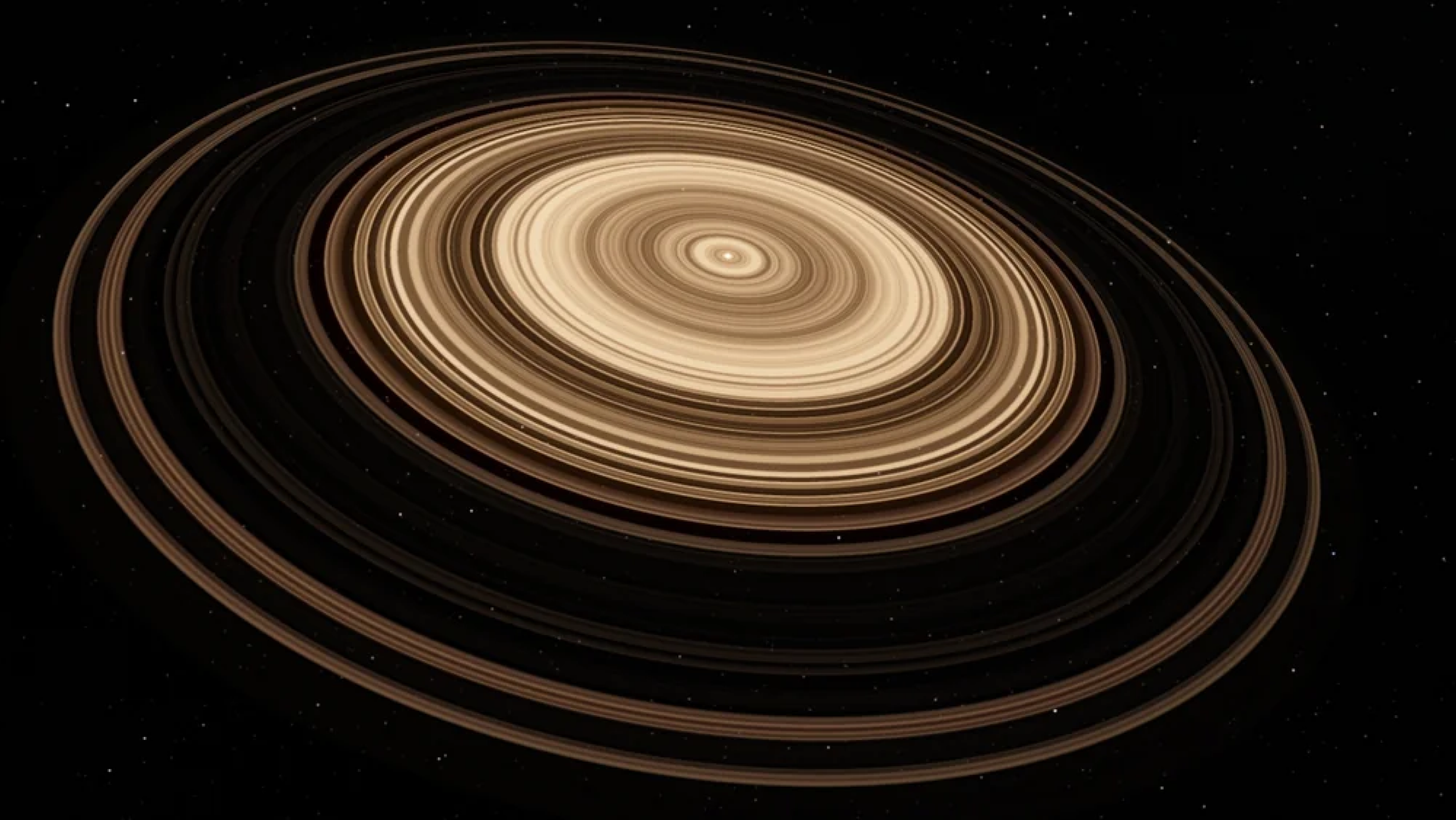
The exoplanet J1407 b is particularly fascinating because of its extremely large ring system. Here is a detailed summary of this unique exoplanet:
Discovery and Observation
- discovery : J1407 b was discovered in 2012 by a group of researchers led by Eric Mamajek of the University of Rochester. They observed variations in the brightness of the parent star, J1407, using data from the SuperWASP (Wide Angle Search for Planets).
- parent star : The exoplanet orbits the star J1407, a spectral-type star K (orange dwarf), located about 434 light-years from Earth in the constellation Centauri.
Features of the Ring System
- size of the rings : J1407B has a colossal ring system, estimated at about 120 million kilometers in diameter, about 200 times larger than Saturn’s.
- number of rings : This system includes more than 30 separate rings, each varying in width and composition.
- Space between the Rings : There are regular gaps between the rings, which could indicate the presence of moons (exomoons) in formation, creating gaps similar to Cassini’s divisions in Saturn’s rings.
- Transit effect : The ring system causes complex variations in the brightness of the star J1407, observed as long and deep eclipses.
Properties of the Exoplanet
- Type : J1407 b is a gas giant, probably similar to Saturn or Jupiter, but with possibly very different properties and formation.
- mass and size : Mass estimates for J1407 b vary, but it could be as much as 13 to 26 times Jupiter’s mass. Due to the uncertainties and influence of the ring system, the exact characteristics of the planet itself are yet to be determined accurately.
- orbital period : The orbital period of J1407 b around its parent star is estimated to be about 10 years.
Importance of J1407 b
- Study of Ring Systems : J1407 b offers a unique opportunity to study the formation and dynamics of ring systems outside our solar system. Models based on his observations can improve understanding of the evolution of planetary rings and the processes of moon formation.
- Window on the Exoplanets : The discoveries associated with J1407 b enrich our knowledge of the possible varieties and configurations of exoplanets, especially those that defy expectations based on our own solar system.
Resources and Observations
- telescopes used : The brightness variations of J1407 caused by the passage of J1407 b and its rings were mainly detected with the SuperWASP telescope and other complementary follow-ups.
- modeling : Sophisticated models are used to simulate light variations and understand the structure of the J1407 b ring system.
Representations and Comparisons
- images of artists : Artistic representations of the ring system of J1407 b show majestic and complex rings, much larger than those of Saturn.
- Comparison with Saturn : Saturn’s ring systems, while impressive, are minimal in comparison to the size of the J1407 b ring system.
References and Studies
- Publications : For further exploration, the work of Mamajek and colleagues provides detailed information on the analysis of observational data and proposed models.
J1407 b continues to captivate astronomers and astronomy enthusiasts with its exceptional ring system, opening up perspectives on possible complex structures around exoplanets.
Proxima Centauri b
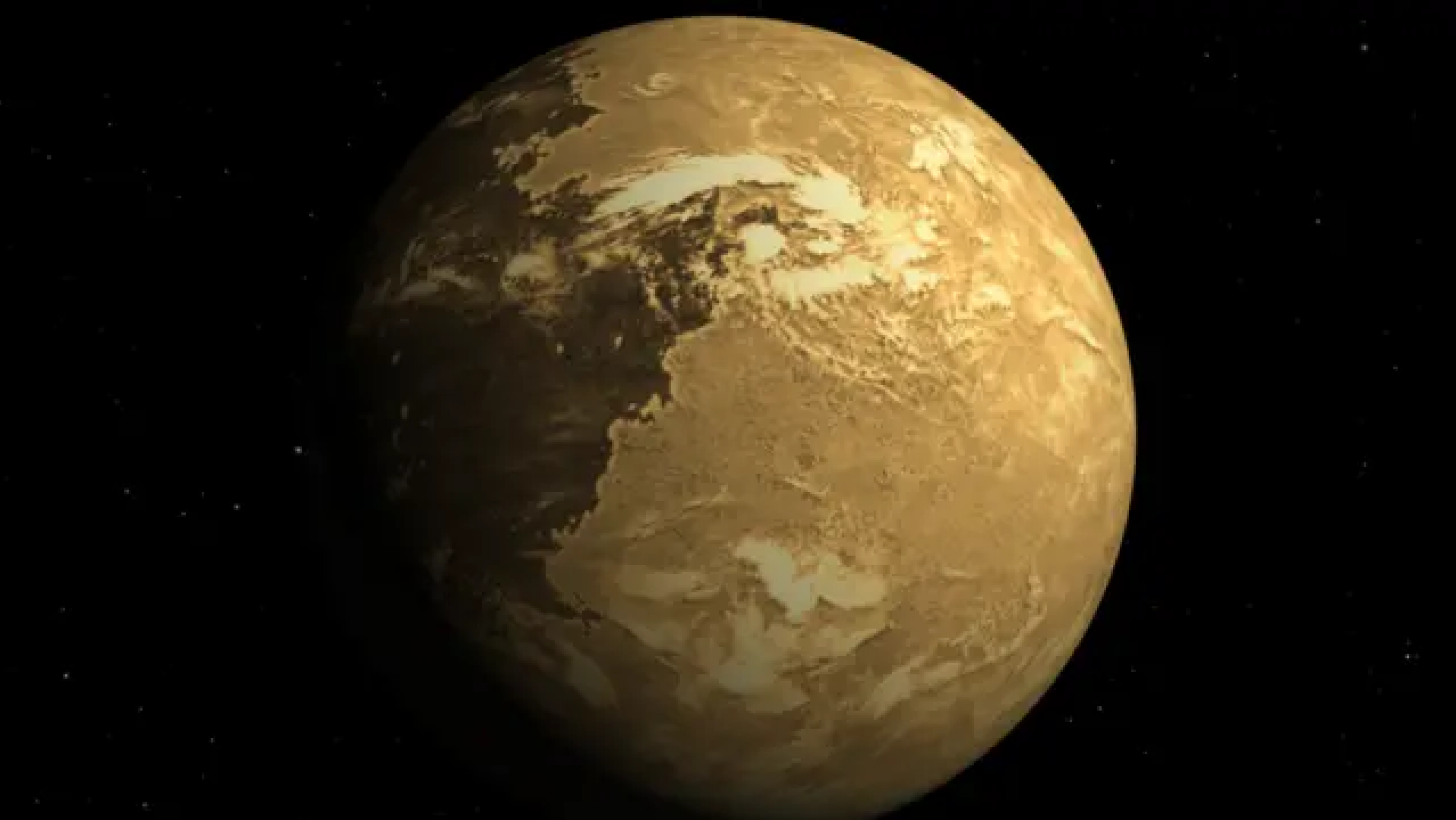
Proxima Centauri b is one of the closest exoplanets to our solar system and is of great interest due to its proximity and position in the habitable zone of its star. Here is a complete overview:
discovery
- discovery : Proxima Centauri b was discovered in August 2016 by an international team led by Guillem Anglada-Escudé.
- detection method : The discovery was made thanks to the radial velocity method, which measures the slight variations in the speed of the star Proxima Centauri caused by the gravity of the planet.
Properties of the Mother Star
- Star : Proxima Centauri, a red dwarf of spectral type M5.5Ve.
- Distance : Located about 4.24 light-years from Earth, Proxima Centauri is the closest star to our solar system.
- surface temperature : Approximately 3,042 K (2,769°C).
- luminosity : Very low compared to our Sun, only 0.17% of its brightness.
Features of Proxima Centauri b
- Mass : Estimated at at least 1.17 times the mass of the Earth.
- radius : Unknown, but assuming a rocky composition, it could be similar to that of Earth.
- orbits : It orbits at a distance of 0.0485 AU (7.25 million kilometers) from Proxima Centauri.
- orbital period : About 11.2 days.
- Type : Most likely a rocky planet, given its mass and proximity to the star.
Potential Habitability
- habitable zone : Proxima Centauri b is located in the habitable zone of its star, where temperatures theoretically allow the presence of liquid water on the surface.
- surface temperature : With an atmosphere similar to Earth, surface temperatures could allow liquid water. However, in the absence of accurate atmospheric data, this remains hypothetical.
- Stellar radiation : Proxima Centauri, being a red dwarf, emits stellar eruptions and X-rays that could negatively affect the habitability of Proxima Centauri b by damaging its atmosphere and bombarding the surface with harmful radiation.
challenges and opportunities
- stellar flares : Red dwarfs like Proxima Centauri have frequent eruptions that can make it difficult to form a stable atmosphere, a crucial factor for habitability.
- Tides : Proxima Centauri b could be rotating synchronously with its star, meaning that the same face of the planet is always oriented towards the star, resulting in one side constantly lit and another always in darkness. This could create extreme weat
- Exploration Future : Proxima Centauri b is a prime objective for future exploration and research missions, including mission concepts like Breakthrough Starshot, which plans to send small probes through interstellar space at speeds close to that of light.
observations and studies
- Instruments : The discovery and observations were made mainly with spectrographs such as HARPS (High Accuracy Radial Velocity Planet Searcher) on ESO’s 3.6-metre telescope in La Silla, Chile.
- Atmosphere : So far, no atmosphere has been confirmed, but future studies with instruments like the James Webb Space Telescope could provide crucial information.
Comparison with the Earth
- Similarities : Proxima Centauri b is similar to Earth in terms of mass and rock composition potential.
- Differences : Its proximity to its star and the stellar eruptions of Proxima Centauri pose challenges for habitability.
Scientific Importance
- Study of Rocky Exoplanets : Proxima Centauri b offers a unique opportunity to study a relatively close rocky exoplanet, which could give clues about the formation and habitability of Earth-like worlds.
- Search for Life : Although there are challenges, the possibility that Proxima Centauri b houses an atmosphere and potentially life intrigues scientists and motivates further research.
Review
Artistic representations of Proxima Centauri b often show a planet with a potentially rocky surface, often illustrated in red and orange tones to reflect the light emitted by its red dwarf.
Proxima Centauri b remains a fascinating target for modern astronomy, attracting attention for its unique features and intriguing research possibilities on habitable exoplanets.
TRAPPIST-1e
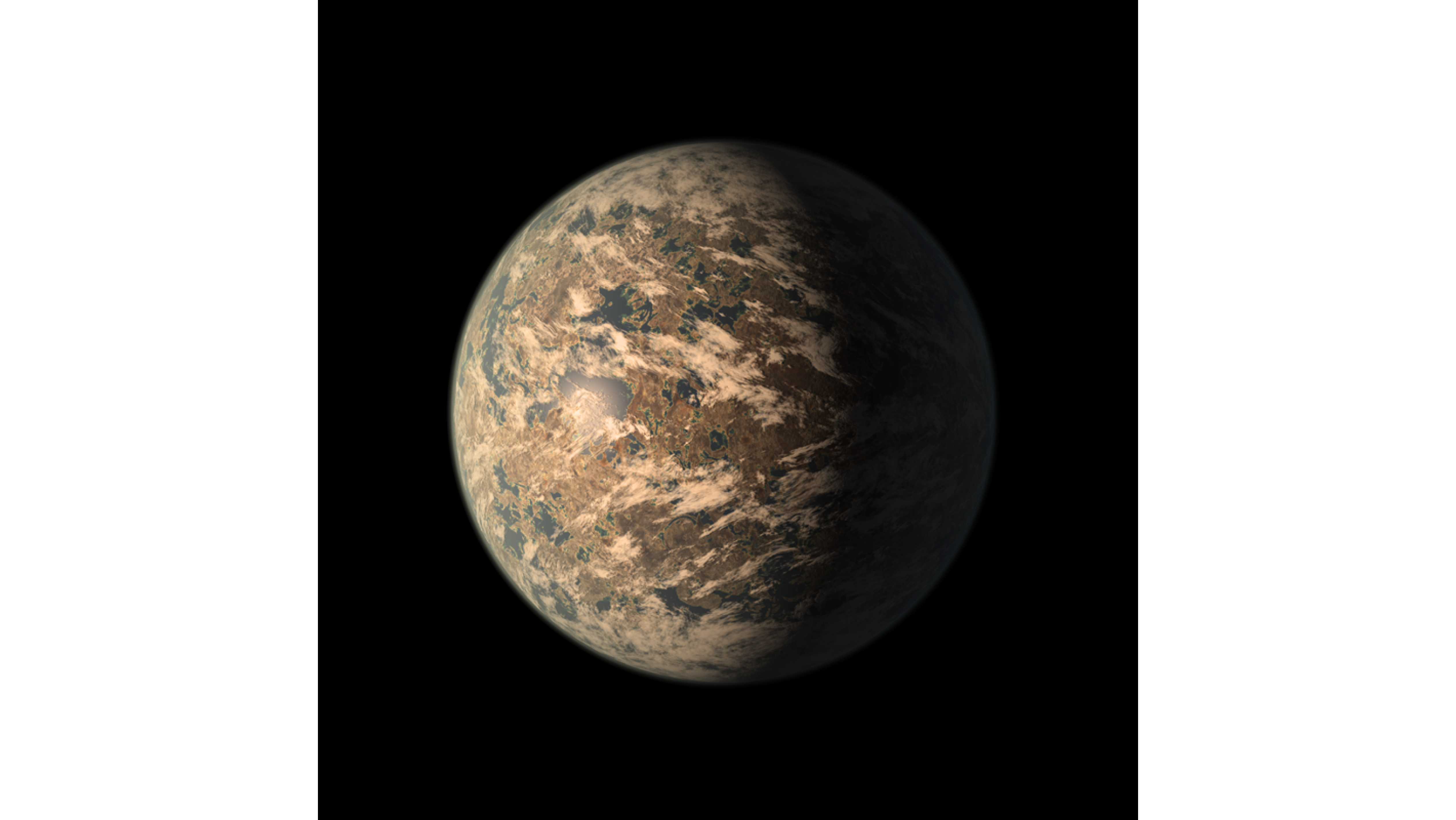
Exoplanet TRAPPIST-1e is one of seven planets discovered around the star TRAPPIST-1. It is particularly notable for its position in the habitable zone and its potential similarities with the Earth. Here is a complete overview of TRAPPIST-1e:
Discovery
- Discovery : TRAPPIST-1e was discovered in 2017 by a team using the Transiting Planets and Planetesimals Small Telescope at the La Silla Observatory in Chile.
- Detection Method : The discovery was made by the transit method, where the planets pass in front of their star, causing a periodic drop in the brightness of the star.
Parent Star Properties
- Star : TRAPPIST-1, an ultra-cold M8 spectral dwarf.
- Distance : Located approximately 39.5 light years from Earth in the constellation of Aquarius.
- Surface Temperature : Approximately 2,516 K (2,243°C).
- Brightness : Approximately 0.05% of the Sun’s brightness.
- Mass and Size : TRAPPIST-1 has about 8% mass and 11% sunlight.
Features of TRAPPIST-1e
- Ground : About 0.77 times that of Earth.
- Radius : About 0.92 times that of Earth.
- Composition : Probably rocky, with a density similar to that of the Earth, suggesting a composition of iron and silicates.
- Surface Gravity : About 93% of that of the Earth.
- Orbital Distance : Approximately 0.029 AU (4.33 million kilometres) of TRAPPIST-1.
- Orbital Period : Approximately 6.1 days.
- Type : Rocky planet, often classified as "super-Earth" or "analog Earth".
Potential Habitability
- Habitable Zone : TRAPPIST-1e is located in the habitable zone of its star, where temperatures could allow the existence of liquid water on the surface.
- Surface Temperature : Estimated at about -7°C (19°F) with an atmosphere similar to the Earth’s, but this is highly dependent on actual atmospheric conditions.
- Atmosphere : No specific atmosphere has been detected, but future studies should examine its composition and ability to house liquid water.
Environment and Conditions
- Synchronous rotation : Like other TRAPPIST-1 planets, TRAPPIST-1e could be in synchronous rotation with its star, always showing the same face to the star, which can create very contrasting climates between the day side and the night side.
- Radiation : TRAPPIST-1e receives about 60% of the energy that the Earth receives from the Sun, which puts the planet in a favorable position for theoretical habitability.
- Potential Atmosphere : The existence of an atmosphere capable of stabilizing surface temperatures and protecting against radiation is essential for habitability.
Exploration and Studies
- Instruments Used : Initial discoveries and follow-ups were made with telescopes such as TRAPPIST-Sud, as well as the Spitzer Space Telescope and ground-based instruments such as Hubble for complementary observations.
- Future Exploration : The James Webb Space Telescope (JWST) has planned to study the atmospheres of TRAPPIST-1 planets, including TRAPPIST-1e, for signs of habitability and biosignatures.
Earth Comparison
- Similarities : TRAPPIST-1e has a size and mass close to those of the Earth, which makes it particularly interesting for the study of potentially habitable worlds.
- Differences : Its environment is influenced by a star that is much colder and less bright than the Sun, which affects atmospheric composition and dynamics.
Scientific Importance
- Study of Rocky Worlds : TRAPPIST-1e offers a unique opportunity to study a rocky planet in the habitable zone of an ultra-cold dwarf, expanding our understanding of exoplanetary environments.
- Search for Life : While challenges remain, TRAPPIST-1e is one of the best candidates for finding conditions compatible with life outside our solar system.
Review
Artistic depictions often show TRAPPIST-1e with characteristics similar to Earth, including a rocky surface and, potentially, oceans, although still hypothetical.
TRAPPIST-1e is a prime target for future research on habitable exoplanets because of its characteristics comparable to Earth and its position in the habitable zone of its parent star.
Kepler-22b
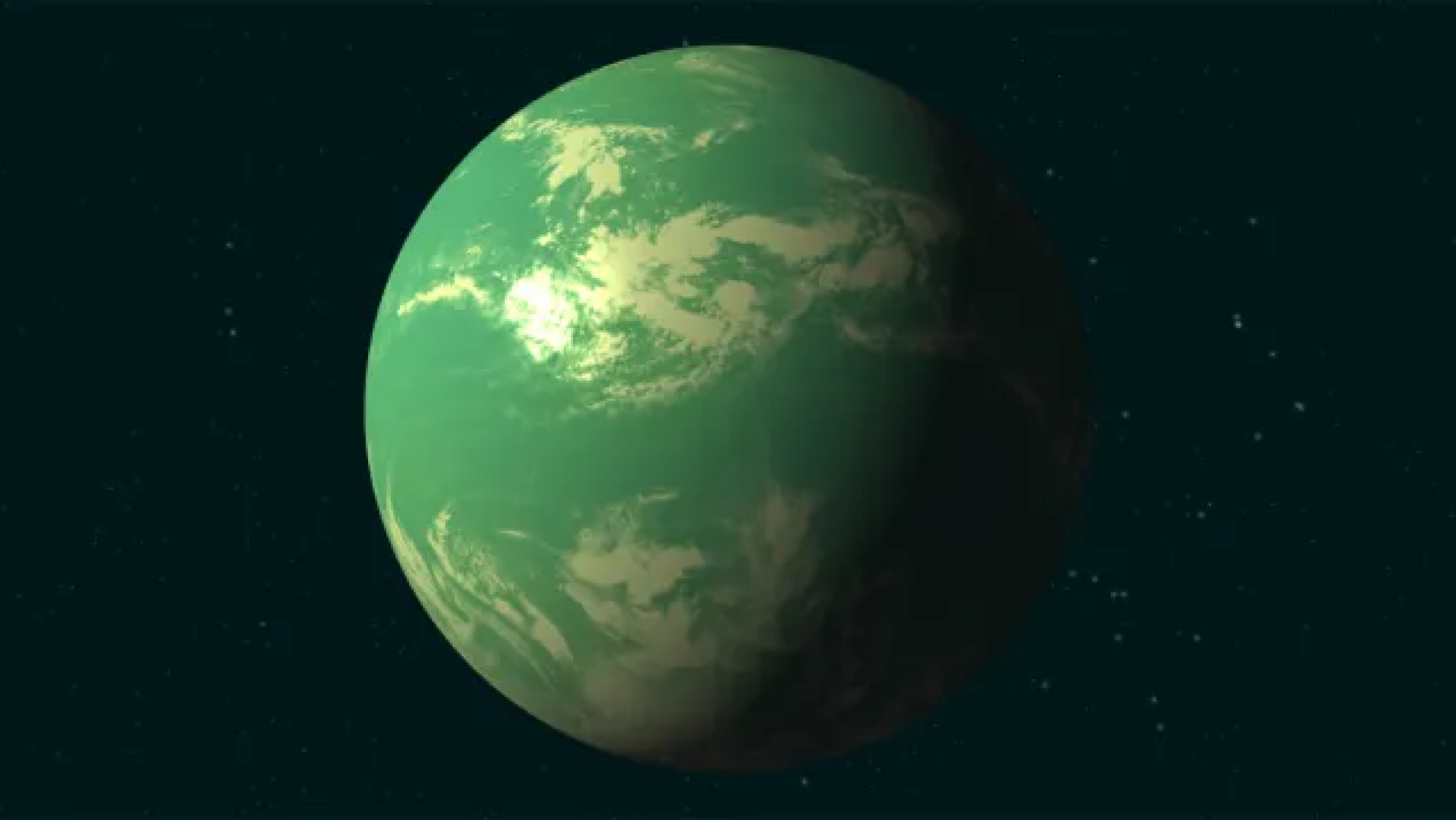
Kepler-22b is one of the first exoplanets discovered in the habitable zone of a solar-like star, making it a major focus in the search for potentially habitable exoplanets. Here is a detailed view of this exoplanet:
Discovery
- Discovery : Kepler-22b was discovered in December 2011 by NASA’s Kepler mission.
- Detection Method : The planet has been detected by the transit method, where it passes in front of its star, causing a periodic drop in the observed brightness of the star.
Parent Star Properties
- Star : Kepler-22 (or KOI-087), a G5V spectral star, very similar to the Sun.
- Distance : Located approximately 620 light years from Earth in the constellation Swan.
- Surface Temperature : Approximately 5,518 K (5,245°C).
- Brightness : About 79% of that of the Sun.
- Mass and Size : Approximately 97% of mass and 98% of sunlight.
Characteristics of Kepler-22b
- Mass : Estimated at about 5 to 36 times that of Earth. The exact mass is still uncertain because it was not determined by the radial velocity method.
- Radius : About 2.4 times that of the Earth, which puts it in the "super-Earth" category.
- Surface Gravity : Approximately 1.4 to 8 times that of the Earth, based on mass estimates.
- Orbital Distance : Approximately 0.849 AU (127 million kilometres) from Kepler-22.
- Orbital Period : Approximately 290 days.
- Type : Super-Earth potentially rocky or oceanic.
Potential Habitability
- Habitable Zone : Kepler-22b is well within the habitable zone of its star, the region where temperatures potentially allow the presence of liquid water on the surface.
- Surface Temperature : Without atmosphere, the equilibrium temperature is estimated at about -11°C (12°F). With an atmosphere similar to the Earth’s, the temperature could be moderate at about 22°C (72°F).
- Atmosphere : The exact existence and composition of the Kepler-22b atmosphere is not yet determined, but an atmosphere could play a crucial role in moderating surface temperatures.
Environment and Conditions
- Possibility of Oceans : Due to its size, Kepler-22b could be an oceanic planet with vast bodies of water, although this remains speculative without accurate atmospheric data.
- Composition : According to planetary structure models, Kepler-22b could have a rocky surface or be composed largely of water with a thick atmosphere of water vapour.
Exploration and Studies
- Instruments Used : The Kepler mission was essential for the discovery of Kepler-22b by detecting its transits in front of the star Kepler-22.
- Future Exploration : Future instruments such as the James Webb Space Telescope (JWST) could provide more detailed observations of Kepler-22b, particularly regarding its atmosphere and surface characteristics.
Earth Comparison
- Similarities : Kepler-22b orbits a star similar to the Sun and is in the habitable zone, making it a promising target for searching for conditions similar to those of the Earth.
- Differences : The planet is significantly larger than Earth, and its environment could vary considerably, especially if it has a thick atmosphere or vast oceans.
Scientific Importance
- Super-Earth Study : Kepler-22b represents a planet type larger than Earth but potentially rocky, offering perspectives on the diversity of planets in the habitable zone.
- Search for Life : As the first exoplanet of this type discovered in the habitable zone of a solar star, it offers opportunities to understand the conditions necessary for life and biosignatures in extrasolar environments.
Review
Artistic representations of Kepler-22b often show a planet with oceanic features, reflecting its potential to shelter vast bodies of water. However, these illustrations remain hypothetical without confirmed atmospheric data.
Kepler-22b continues to be a focus of interest for astronomy and astrophysics because of its favorable position for habitability and its potential for harboring conditions similar to those of the Earth.