Discover fascinating things about the planets of our solar system as well as their moons and much more
SOLAR SYSTEM
The creation of the Solar System :
About 4.6 billion years ago, a massive nebula of gas and dust was floating in space. This nebula was the cradle of the future solar system. It all started with a disturbance in this diffuse mass, perhaps a nearby supernova or the passing of a nearby star. This disruption triggered a fascinating process of star and planet formation.
Gravity began to act on the nebula, slowly drawing matter together. The denser regions began to collapse on their own, forming warm, dense protostars in the center of gas clouds. As these protostars grew, they accumulated more and more matter in rotation around them, forming accretion discs.
In the center of one of these discs, our star, the Sun, was born. The materials in the disc clumped to form planets, moons, asteroids and comets. The dust and gas particles gathered in small lumps, then in planetesimals, and finally in planets.
The inner planets, such as Earth, Mercury, Venus and Mars, were formed from denser rock and metal materials, while the outer planets, such as Jupiter, Saturn, Uranus and Neptune, were formed mainly from gas and ice.
The remaining debris in the disc formed smaller bodies like asteroids and comets. For millions of years, these bodies continued to agglomerate and collide, forming distinct craters and landscapes on the planets.
Finally, the solar system as we know it today emerged from this cosmic whirlwind of matter in motion. Each planet, moon and asteroid has found its place in the delicate balance of this evolving solar system, and continues to evolve to this day, under the constant influence of gravity and other cosmic forces.
The sun
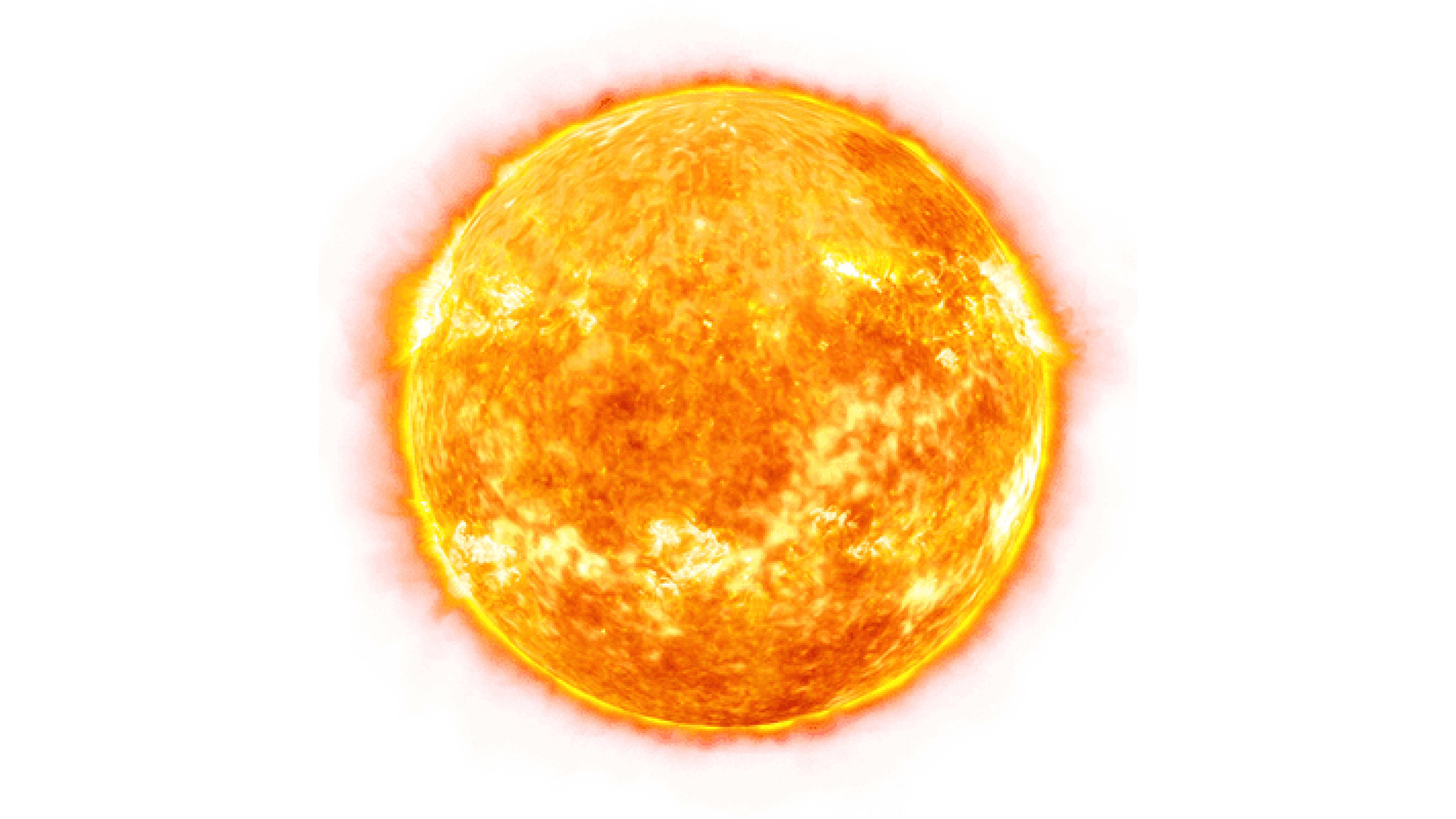
The Sun, this majestic star that reigns at the center of our solar system, has been a real source of fascination for humanity for millennia. Here is a captivating glimpse of this star whose magnificence is undeniable.
Type : The Sun is a yellow dwarf star, belonging to the main sequence of the star classification. This means that it fuses hydrogen into helium in its core, a process that generates the energy that gives us light and heat.
Size : With a radius of about 695 700 kilometres and a diameter of about 1.4 million kilometres, the Sun is a giant sphere among medium-sized stars. To put this into perspective, about 109 times the size of the Earth can be contained in its diameter.
Mass : Its mass is colossal, about 333,000 times that of Earth. This huge mass exerts a considerable gravitational force, keeping the planets in orbit around it.
Orbital period : The Sun, orbiting the center of the Milky Way, takes about 225-250 million years to complete a galactic revolution.
Rotation : The Sun rotates, but differentially, which means that regions near the equator move faster than polar regions. It rotates fully in about 25 days at the equator and in about 35 days at the poles.
Chemical composition : Mainly composed of hydrogen (about 75%) and helium (about 24%), the Sun also contains traces of heavier elements such as oxygen, carbon, neon and iron, among others. These elements are the result of nuclear fusion processes occurring in its nucleus.
Structure : The Sun consists of several distinct layers. At the center is the nucleus, where nuclear fusion reactions produce the energy that keeps our star bright. Around the core are the radiative zone and the convective zone, where the energy produced is transported to the surface. The photosphere, chromosphere and crown are the visible outer layers of the Sun.
Temperature : The surface temperature of the Sun, measured at the photosphere, is about 5,500 degrees Celsius. However, in its core, the temperature reaches millions of degrees Celsius due to the nuclear fusion reactions that occur there.
The Sun, source of life and light for our solar system, remains one of the most studied and admired subjects of astronomy, continuing to dazzle us with its splendor and intrigue us with its mysteries.
Mercury
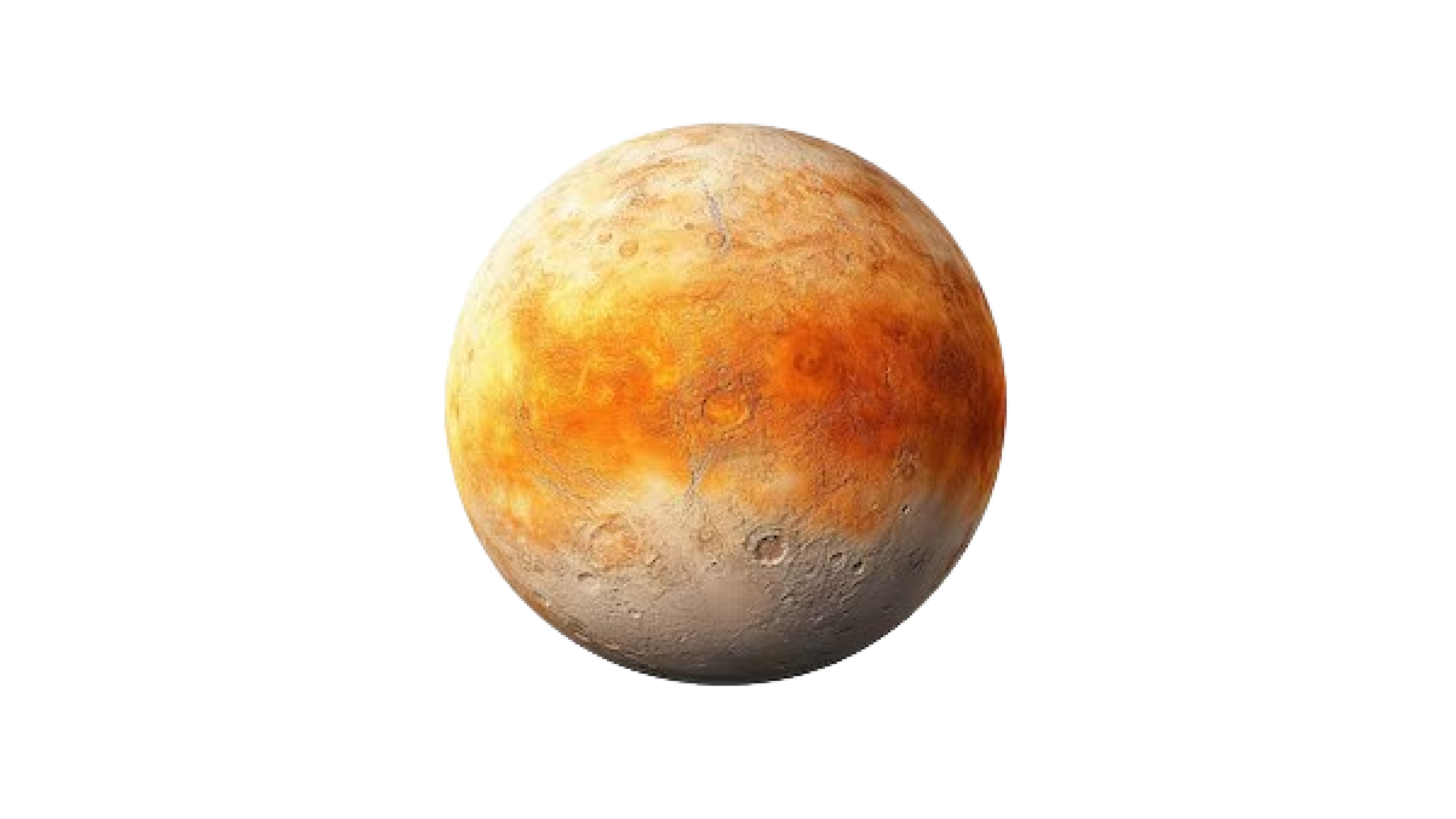
Now let’s explore Mercury, the smallest planet in our solar system but still fascinating in many ways. Here is a detailed account of this planet close to the Sun.
Type : Mercury is a telluric planet, similar to Earth, composed mainly of rocks and metals. It has no significant atmosphere, which distinguishes it from gas giants like Jupiter or Saturn.
Size : With a radius of about 2,439.7 kilometres and a diameter of about 4,879 kilometres, Mercury is the smallest of the terrestrial planets in our solar system.
Mass : Its mass is about 0.055 times that of Earth, making it the second least massive planet after Pluto.
Distance from the sun : Approximately 58 million kilometres
Orbital period : Mercury is one of the closest planets to the Sun, completing an orbit in about 88 Earth days. Its proximity to the Sun also means that it has the shortest orbital period of all planets in the solar system.
Rotation : Surprisingly, Mercury has a very slow rotation on its axis. It makes about 3 rotations on its axis for each two revolutions around the Sun, which means that its solar day (from sunrise to sunset) lasts about 176 Earth days.
Chemical composition : The surface of Mercury is mainly composed of rocks rich in silicates, with an abundance of metals such as iron and nickel. This composition makes it a dense and heavy planet in relation to its size.
Structure : Mercury has a voluminous metal core, representing about 85% of its radius, making it the largest nucleus compared to its size of all terrestrial planets. Around the core is a rocky mantle, although the exact details of its internal structure remain debatable.
Temperature : Due to its proximity to the Sun and its very thin atmosphere, the surface temperature of Mercury varies considerably. During the day, the temperature can reach up to 430 degrees Celsius, while at night it can drop to -180 degrees Celsius due to the lack of atmosphere to retain heat.
Mercury, with its extreme proximity to the Sun and its unique features, continues to intrigue scientists and sky observers, offering valuable insight into the extreme conditions that rocky planets can encounter in our solar system.
Venus
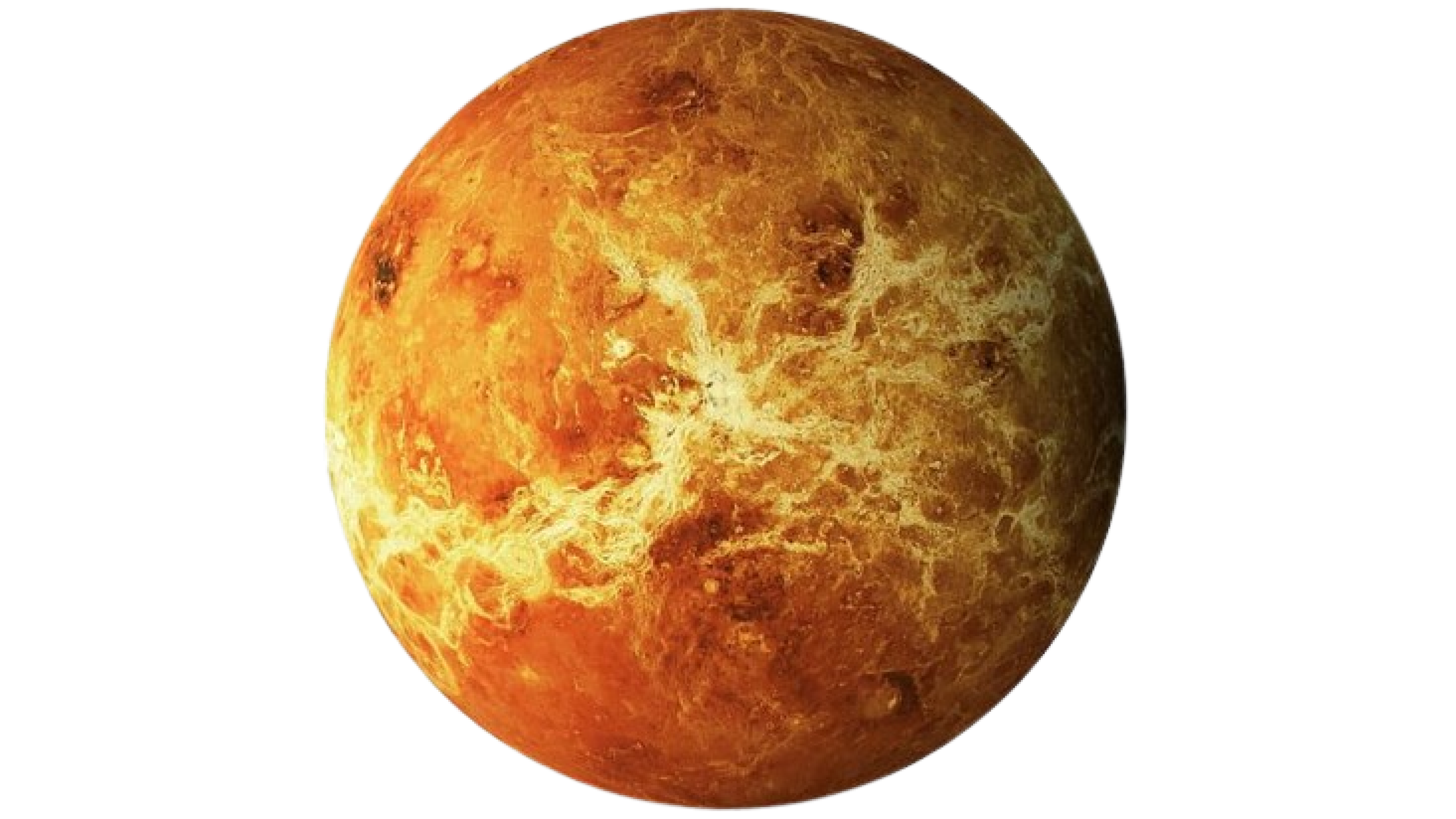
Let us now explore Venus, the sister planet of the Earth in size but very different in its composition and its environment. Here is a detailed portrait of this mysterious planet.
Type : Venus is a telluric planet, similar to Earth, with a solid surface composed mainly of rocks and metals. However, it differs considerably from Earth due to its dense atmosphere and extremely hot surface.
Size : Venus has a radius of about 6,051.8 kilometres and a diameter of about 12,104 kilometres, making it almost as big as the Earth in terms of size.
Mass : Its mass is about 0.815 times that of Earth, which ranks it as the second most massive planet in our solar system after Jupiter.
Distance from the sun : Approximately 108 million kilometres
Orbital period : Venus completes an orbit around the Sun in about 225 Earth days. Its orbit is more circular than that of most other planets, with a very low orbital eccentricity.
Rotation : Venus has a retrograde rotation, which means it rotates in the opposite direction to most other planets in the solar system. Its solar day (from sunrise to sunset) lasts about 117 terrestrial days, while its year is longer.
Chemical composition : The surface of Venus is mainly composed of volcanic rocks, with geological formations such as volcanoes, mountains and plains. Its dense atmosphere is mainly composed of carbon dioxide, with traces of water vapour, nitrogen and other gases.
Structure : Beneath its rocky crust, Venus has a thick mantle of molten rocks and a solid metal core. Its internal structure is similar to that of the Earth, although its retrograde rotation and dense atmosphere have unique effects on its geology and dynamics.
Temperature : Venus has a dense atmosphere composed mainly of greenhouse gases, which creates an extreme greenhouse effect on its surface. Surface temperatures can reach up to 470 degrees Celsius, making it the hottest planet in the solar system, even hotter than Mercury despite its distance from the Sun.
Venus, with its dense atmosphere and infernal surface, remains a fascinating mystery for scientists, offering unique challenges to understanding the formation and evolution of telluric planets.
Earth
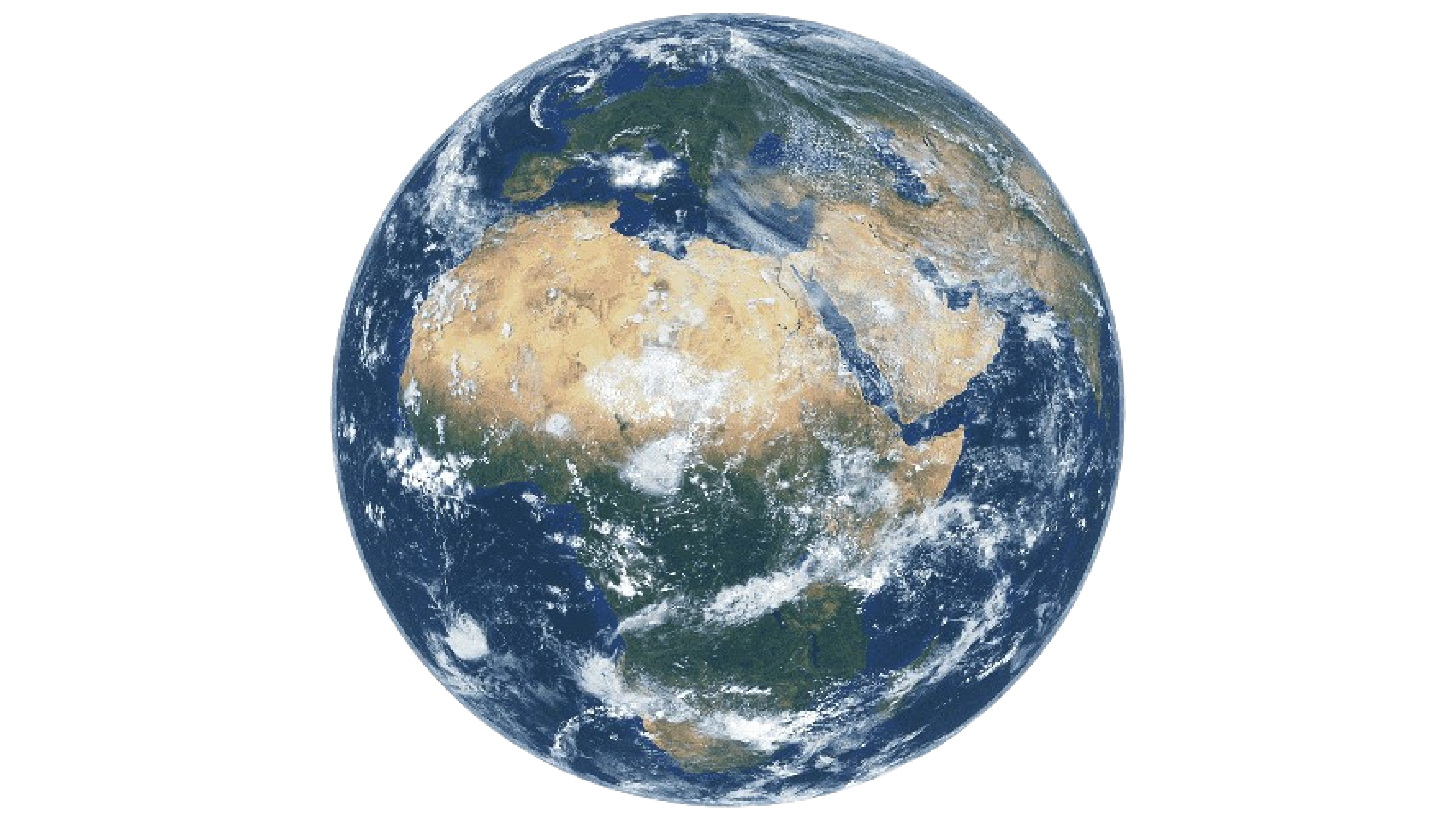
Ah, our beautiful blue planet, Earth, a home for an incredible diversity of life and the only place we knew that could sustain life as we know it. Here is a detailed exploration of our beloved planet :
Type : The Earth is a telluric, rocky planet, composed mainly of silicates and metals. It has an atmosphere that protects its surface and allows life as we know it.
Size : The Earth has an average radius of about 6,371 kilometres and a diameter of about 12,742 kilometres, making it the fifth largest planet in the solar system.
Mass : The mass of the Earth is about 5.972 x 10^24 kilograms, which makes it massive enough to maintain a dense atmosphere and retain sufficient gravity to sustain life.
Distance from the sun : 149.6 million kilometres
Orbital period : The Earth takes about 365.25 days to complete an orbit around the Sun, thus forming a year. This orbital period is the basis of our calendar.
Rotation : The Earth rotates on its axis in about 24 hours, creating a cycle of day and night. This rotation is responsible for the phenomenon of diurnal rotation.
Chemical composition : The earth’s crust is composed mainly of silicate rocks, while the mantle and core are mainly made up of metals such as iron and nickel. The atmosphere is mainly composed of gases such as nitrogen, oxygen, carbon dioxide and other gases at lower concentrations.
Structure : The Earth consists of several distinct layers: the crust, the mantle and the core. The crust is the solid outer layer, while the mantle is mainly composed of molten rocks. The core is divided into a liquid outer core and a solid inner core, mainly composed of iron and nickel.
Temperature : Temperatures on the Earth’s surface vary considerably by region and season, but on average they are around 15 degrees Celsius. Temperatures inside the Earth increase as we descend towards the center, with temperatures estimated at more than 5,000 degrees Celsius at the core.
Earth, with its natural beauty, abundant biodiversity and protective atmosphere, is truly a jewel among the planets of the solar system, and its exploration continues to amaze and inspire us.
Mars
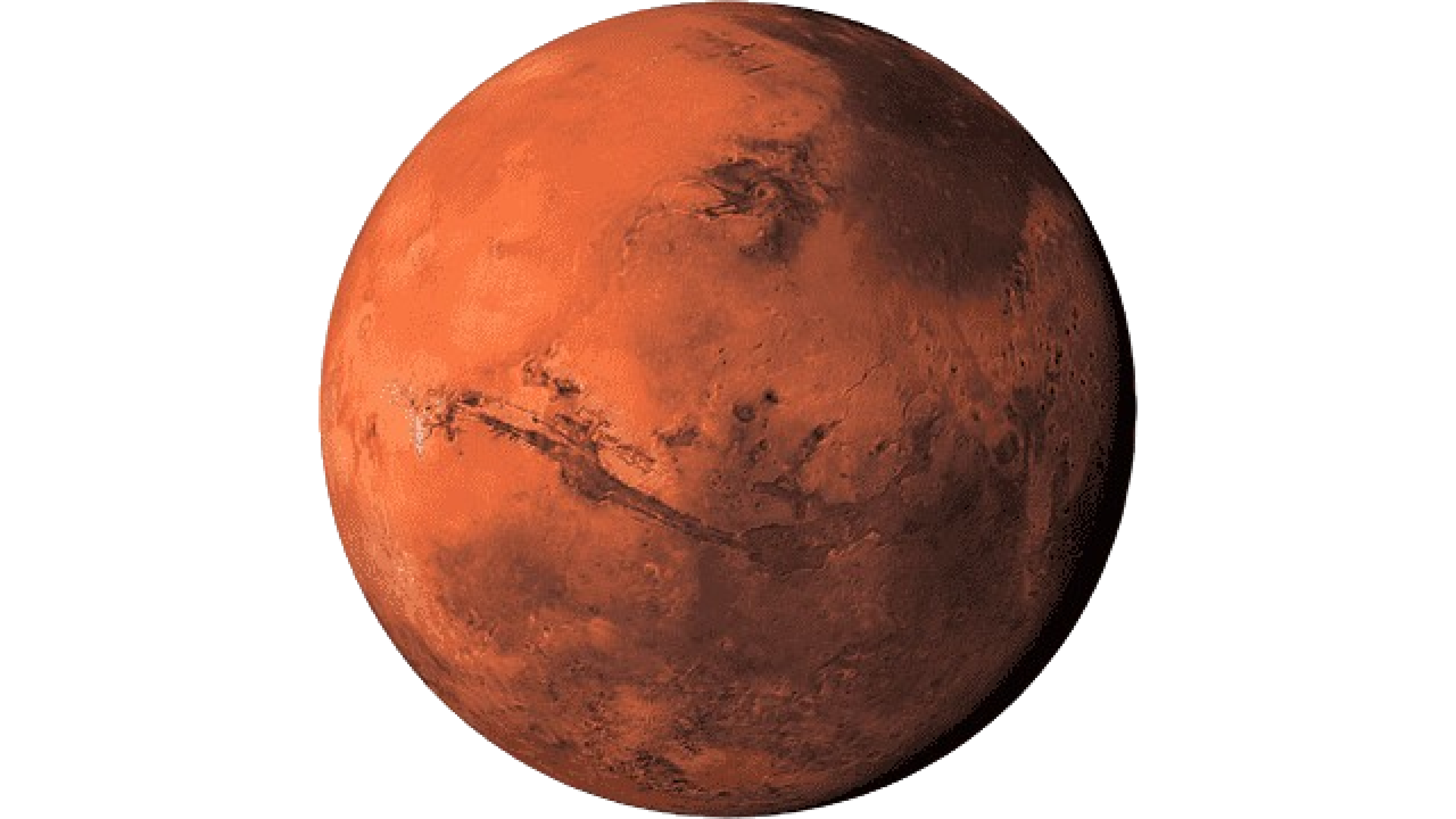
Now let’s explore Mars, the mysterious "red planet" that has captivated the imagination of humanity for centuries. Here is a detailed dive into the characteristics of this fascinating planet :
Type : Mars is a telluric planet, similar to Earth, with a solid surface composed mainly of rocks and dust. It has a thin atmosphere composed mainly of carbon dioxide, with traces of other gases.
Size : Mars has an average radius of about 3,389.5 kilometres and a diameter of about 6,779 kilometres, making it the seventh largest planet in the solar system.
Mass : Its mass is about 0.107 times that of the Earth, which ranks it as the fourth most massive planet in the solar system.
Distance from the sun : Approximately 227.9 million kilometres
Orbital period : Mars takes about 687 Earth days to complete an orbit around the Sun, thus forming a Martian year. Due to its elliptical orbit, the seasons on Mars can be more extreme than on Earth.
Rotation : Mars rotates on its axis in about 24.6 terrestrial hours, creating a day and night cycle similar to that of Earth.
Chemical composition : The surface of Mars is mainly composed of basaltic rocks and dust rich in iron oxides, which gives it its distinctive reddish color. Its atmosphere is mainly composed of carbon dioxide, with traces of nitrogen and argon.
Structure : Mars has an internal structure similar to that of the Earth, with a rocky crust, mantle and core. However, its core seems to be mainly solid, unlike that of the Earth, which has a liquid outer core.
Temperature : The surface temperatures of Mars vary considerably depending on the region and the season. Average temperatures range from -60 degrees Celsius to -125 degrees Celsius at the poles during the Martian winter. Daytime temperatures can be higher, reaching up to 20 degrees Celsius at the equator during the summer.
Mars, with its desert landscapes, polar ice caps and intriguing geological history, remains a prime destination for human and robotic space exploration, offering valuable insight into past and potential conditions of life on other worlds.
Jupiter
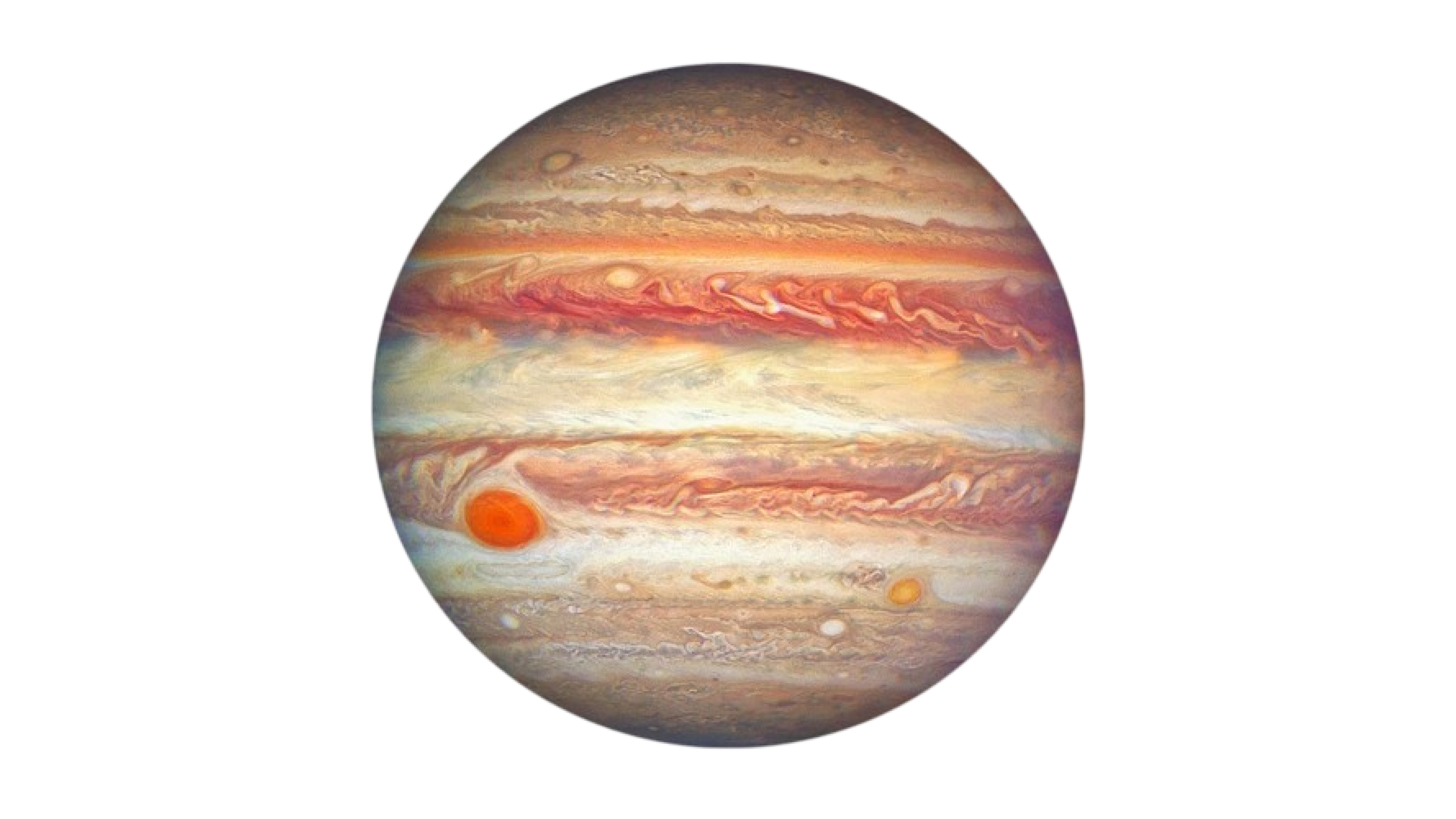
Now let’s explore Jupiter, the largest planet in our solar system and a gas giant with fascinating features :
Type : Jupiter is a gas giant, mainly composed of hydrogen and helium, with traces of volatile compounds and rocks at its core.
Size : Jupiter is the largest planet in the solar system, with an average radius of about 69,911 kilometres and a diameter of about 139,822 kilometres.
Mass : Its mass is about 318 times that of the Earth, making it the most massive planet in the solar system.
Distance from the sun : Approximately 778.6 million kilometres
Orbital period : Jupiter takes about 11.86 Earth years to complete an orbit around the Sun.
Rotation : Jupiter rotates on its axis in about 9 hours and 55 Earth minutes, making it the fastest rotating planet in our solar system.
Chemical composition : Jupiter is mainly composed of hydrogen (~75%) and helium (~24%), with traces of volatile compounds such as water and ammonia.
Structure : Jupiter possède une atmosphère dense, composée principalement de gaz d'hydrogène et d'hélium, avec des couches de nuages colorés en mouvement. Sous son atmosphère se trouve un manteau de gaz comprimé et un noyau rocheux solide.
Temperature : Temperatures on the surface of Jupiter vary with depth, but on average they are very cold, falling to about -145 degrees Celsius. However, as one descends towards the core, temperatures and pressures increase considerably, reaching extremely high values.
Jupiter, with its impressive size, violent storms and mysterious secrets buried in its depths, remains a destination of choice for space exploration and an infinite source of inspiration for astronomers and astronomy enthusiasts.
Saturn
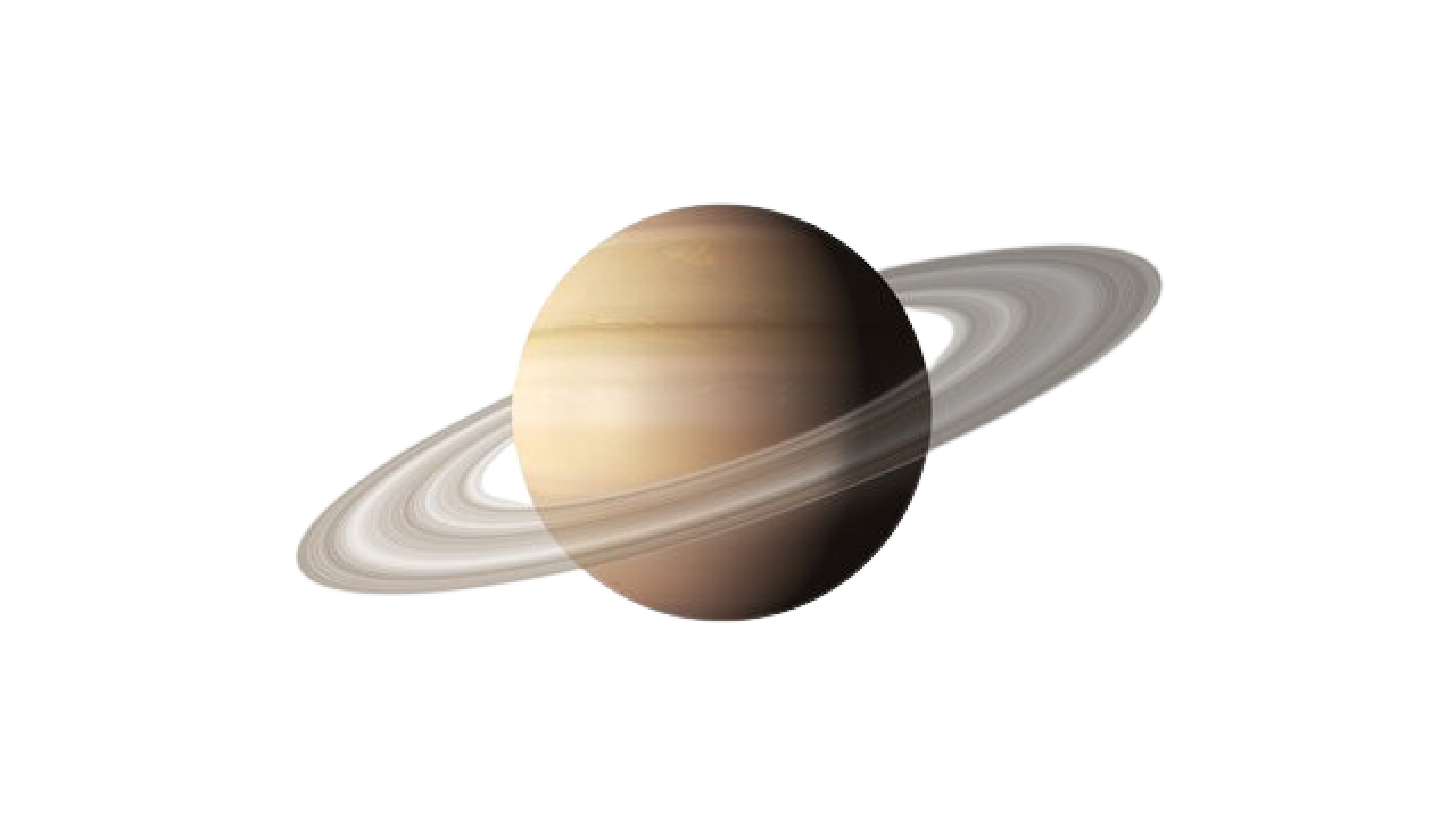
Let’s dive into the mysteries of Saturn, the majestic gas giant of the solar system :
Type : Saturn is a gas giant, mainly composed of hydrogen and helium, with traces of volatile compounds and rocks at its core.
Size : Saturn is the second largest planet in the solar system, with an average radius of about 58,232 kilometers and a diameter of about 116,464 kilometers.
Mass : Its mass is about 95 times that of the Earth.
Distance from the sun : Approximately 1.429 billion kilometres
Orbital period : Saturn takes about 29.5 Earth years to complete an orbit around the Sun.
Rotation : Saturn rotates on its axis in about 10 hours and 33 terrestrial minutes.
Chemical composition : Saturn shares a composition similar to that of Jupiter, mainly composed of hydrogen and helium, with traces of volatile compounds such as water and ammonia.
Structure : Saturn has a dense gas atmosphere composed mainly of hydrogen and helium, with layers of colored clouds in motion. Under its atmosphere is a mantle of compressed gas and a solid rock core.
Temperature : The surface temperatures of Saturn are similar to those of Jupiter, extremely cold, falling to about -145 degrees Celsius. However, as one descends towards the core, temperatures and pressures increase, reaching extremely high values.
Saturn, with its impressive ring system and mesmerizing celestial beauty, continues to captivate our imagination and inspire us to explore the mysteries of the universe.
Uranus
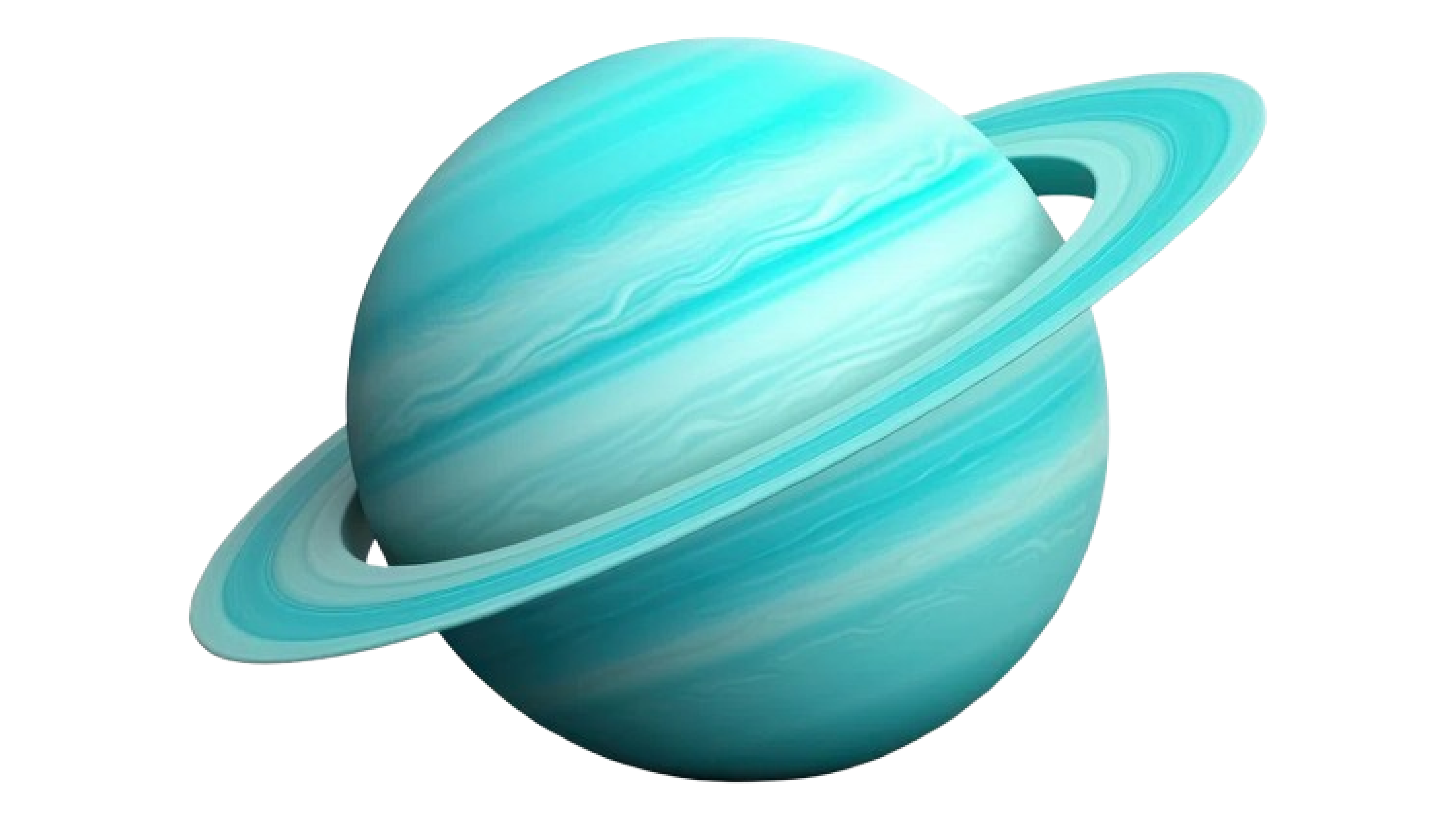
Let’s explore the icy depths of Uranus, one of the ice giants of the solar system :
Type : Uranus is an ice giant, composed mainly of hydrogen, helium and water, with traces of methane.
Size : Uranus has an average radius of about 25,362 kilometres and a diameter of about 50,724 kilometres.
Mass : Its mass is approximately 14.5 times that of Earth.
Distance from the sun : Approximately 2.871 billion kilometres
Orbital period : Uranus takes about 84 Earth years to complete an orbit around the Sun.
Rotation : Uranus rotates on its axis in about 17 hours and 14 minutes terrestrial, but its axis of rotation is tilted in an unusual way, giving it extreme seasons.
Chemical composition : Uranus is mainly composed of hydrogen (~83%) and helium (~15%), with traces of water, methane and ammonia.
Structure : Uranus has a thick atmosphere of gas and ice, a mantle of water, methane and liquid ammonia, and a solid rock core.
Temperature : The surface temperatures of Uranus are extremely cold, falling to about -224 degrees Celsius, but increasing as one descends towards its core.
Uranus, with its distinct blue-green color and unique axial tilt, continues to defy our expectations and inspire human curiosity in exploring our solar system.
Neptune
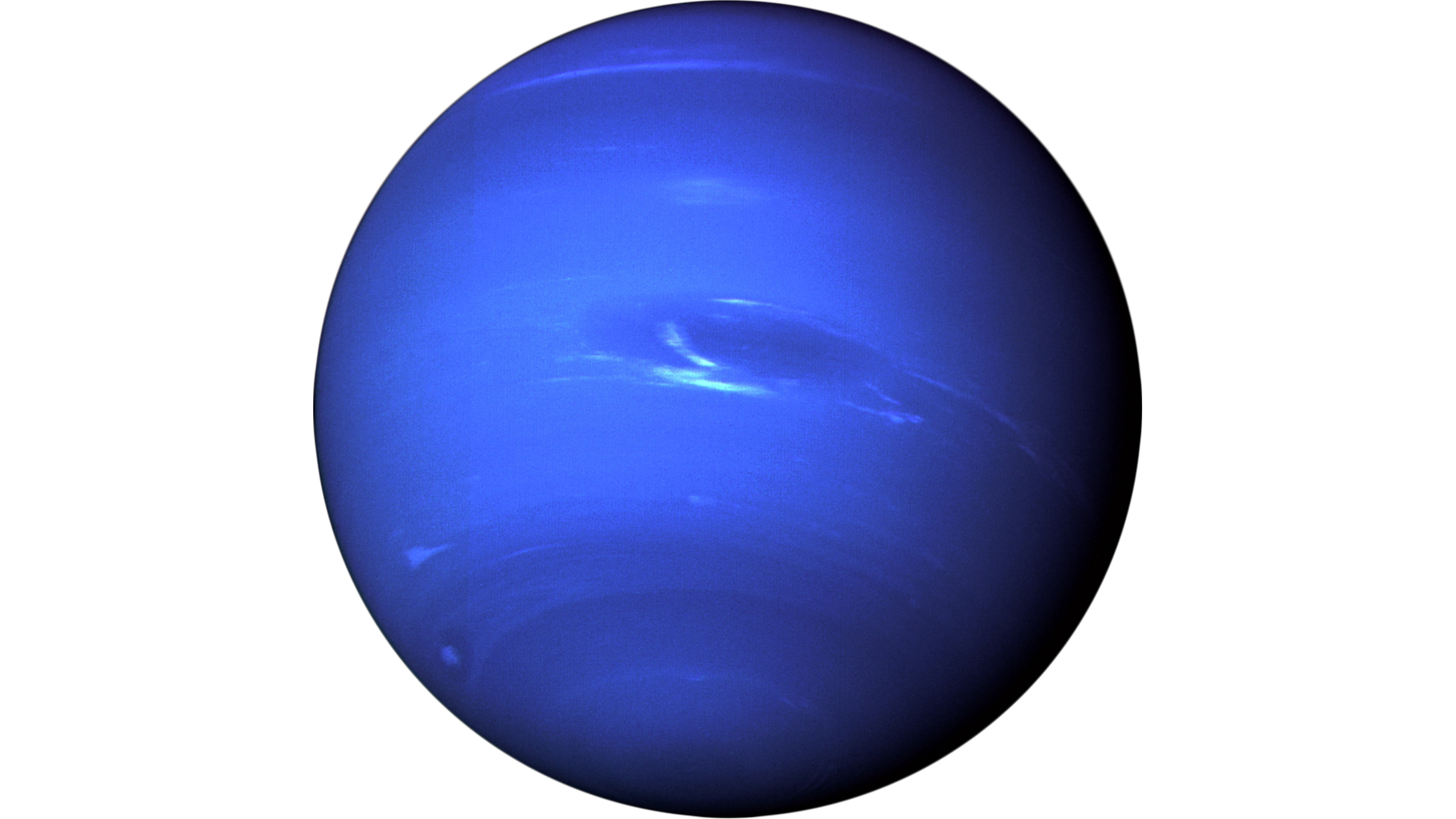
Let’s dive into the icy depths of Neptune, the last of the solar system’s ice giants :
Type : Neptune est une géante de glace, composée principalement d'hydrogène, d'hélium et d'eau, avec des traces de méthane.
Size : Neptune has an average radius of approximately 24,622 kilometres and a diameter of approximately 49,244 kilometres.
Mass : Its mass is about 17 times that of the Earth.
Distance from the sun : About 4.495 billion kilometres
Orbital period : Neptune takes about 164.8 Earth years to complete an orbit around the Sun.
Rotation : Neptune rotates on its axis in about 16 hours and 6 minutes terrestrial.
Chemical composition : Neptune is mainly composed of hydrogen (~80%), helium (~19%) and traces of water, methane and ammonia.
Structure : Neptune has a dense atmosphere of gas and ice, a mantle of water, methane and liquid ammonia, and a solid rock core.
Temperature : Neptune’s surface temperatures are also very cold, falling to about -218 degrees Celsius, but increasing towards its core.
Neptune, with its deep blue color and strong winds, continues to fascinate scientists and astronomy enthusiasts, offering a captivating glimpse of the icy and mysterious worlds that dot our solar system.
The solar system also contains dwarf planets
Pluto
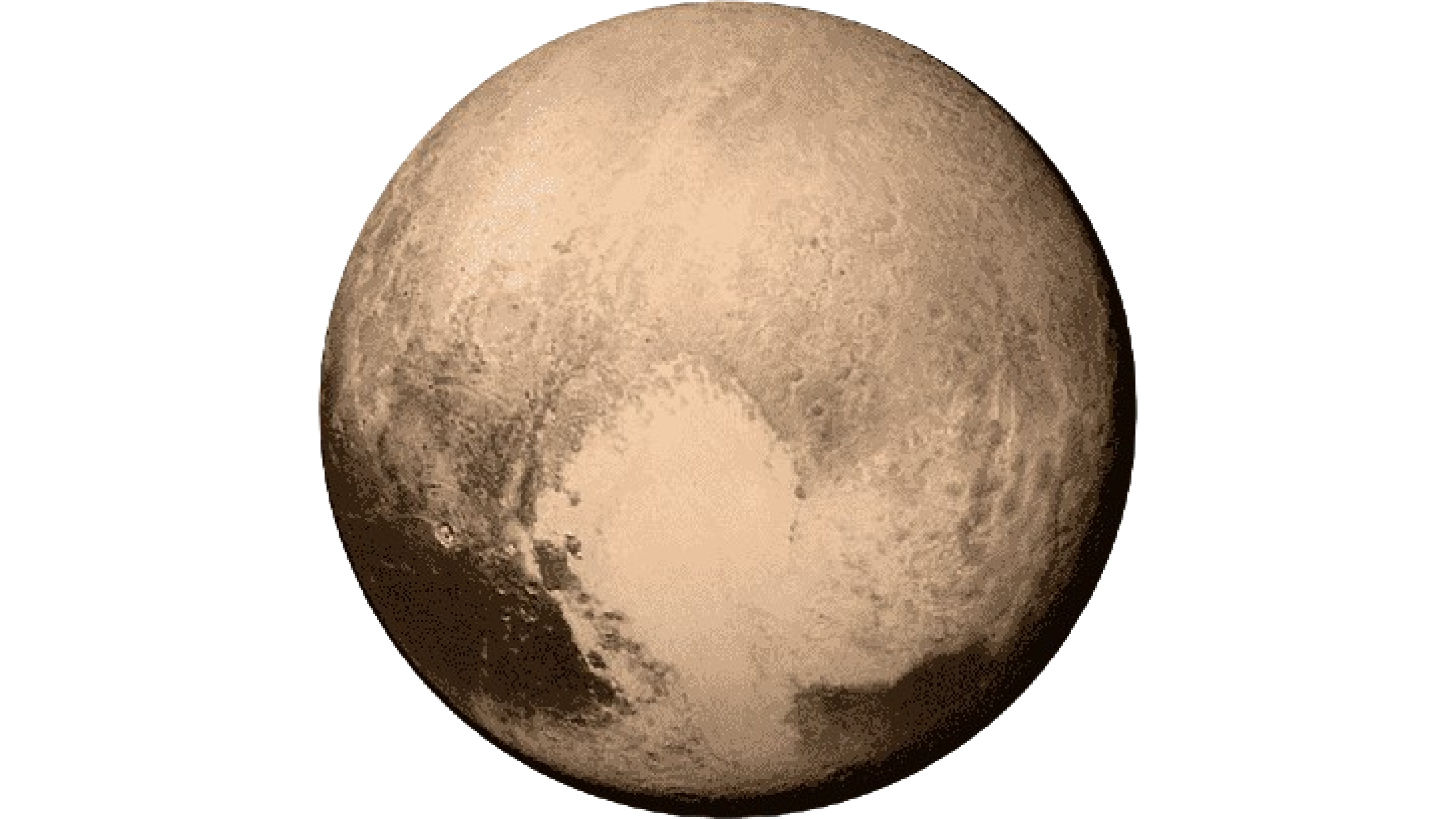
Let’s explore Pluto, a fascinating dwarf planet often unknown to the solar system :
Type : Pluto is a dwarf planet, originally classified as a planet in its own right before being demoted to its current status in 2006. It belongs to the Kuiper belt, a region beyond Neptune’s orbit.
Size : Pluto has an average radius of about 1,186 kilometres and a diameter of about 2,374 kilometres.
Mass : Its mass is about 0.002 times that of the Earth.
Distance from the sun : Approximately 5.906 billion kilometres
Orbital period : Pluto takes approximately 248 Earth years to complete an orbit around the Sun.
Rotation : Pluto turns on its axis in about 6 days and 9 hours terrestrial.
Chemical composition : The exact composition of Pluto is not completely known, but it is mainly composed of rocks and ice of water and methane.
Structure : Pluto has a rocky crust covered with volatile ice, such as water ice and methane ice. Its interior can contain a small rocky core.
Temperature : Temperatures on the surface of Pluto are extremely cold, falling to about -230 degrees Celsius.
Pluto, with its turbulent history and remoteness from other planets of the solar system, continues to be a source of interest to astronomers and space exploration enthusiasts, offering a unique insight into the distant worlds of our solar system.
Ceres
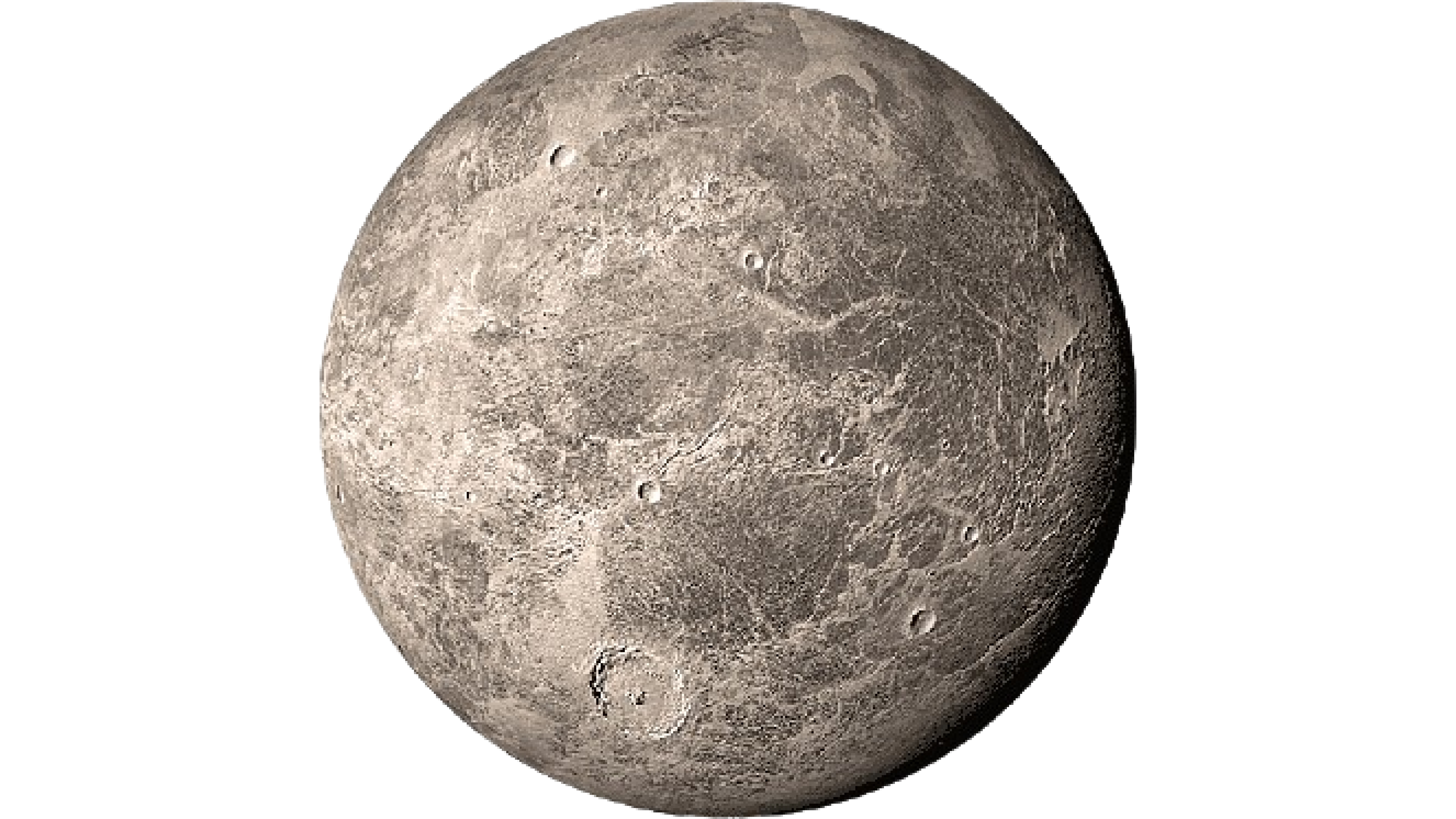
Let’s explore Ceres, the largest dwarf planet in the asteroid belt between Mars and Jupiter :
Type : Ceres is a dwarf planet and the largest object in the asteroid belt. It is mainly composed of rocks and water ice.
Size : Ceres has an average radius of about 473 kilometers and a diameter of about 946 kilometers.
Mass : Its mass is about 0.00015 times that of the Earth.
Distance from the sun : Approximately 413.7 million kilometres
Orbital period : Ceres takes about 4.6 Earth years to complete an orbit around the Sun.
Rotation : Ceres turns on its axis in about 9 terrestrial hours.
Chemical composition : The composition of Ceres is mainly rocky, with a surface covered with water ice. It also contains traces of minerals and other organic compounds.
Structure : Ceres has a rocky crust that covers a mantle of water ice. Its interior may contain a small rocky core.
Temperature : Temperatures on the surface of Ceres vary depending on the region, but on average they are quite cold, falling to about -100 degrees Celsius.
Ceres, with its unique composition and location in the asteroid belt, is a target of interest for scientists and space exploration missions, providing valuable insight into the formation and evolution of dwarf planets and small bodies in the solar system.
Makemake
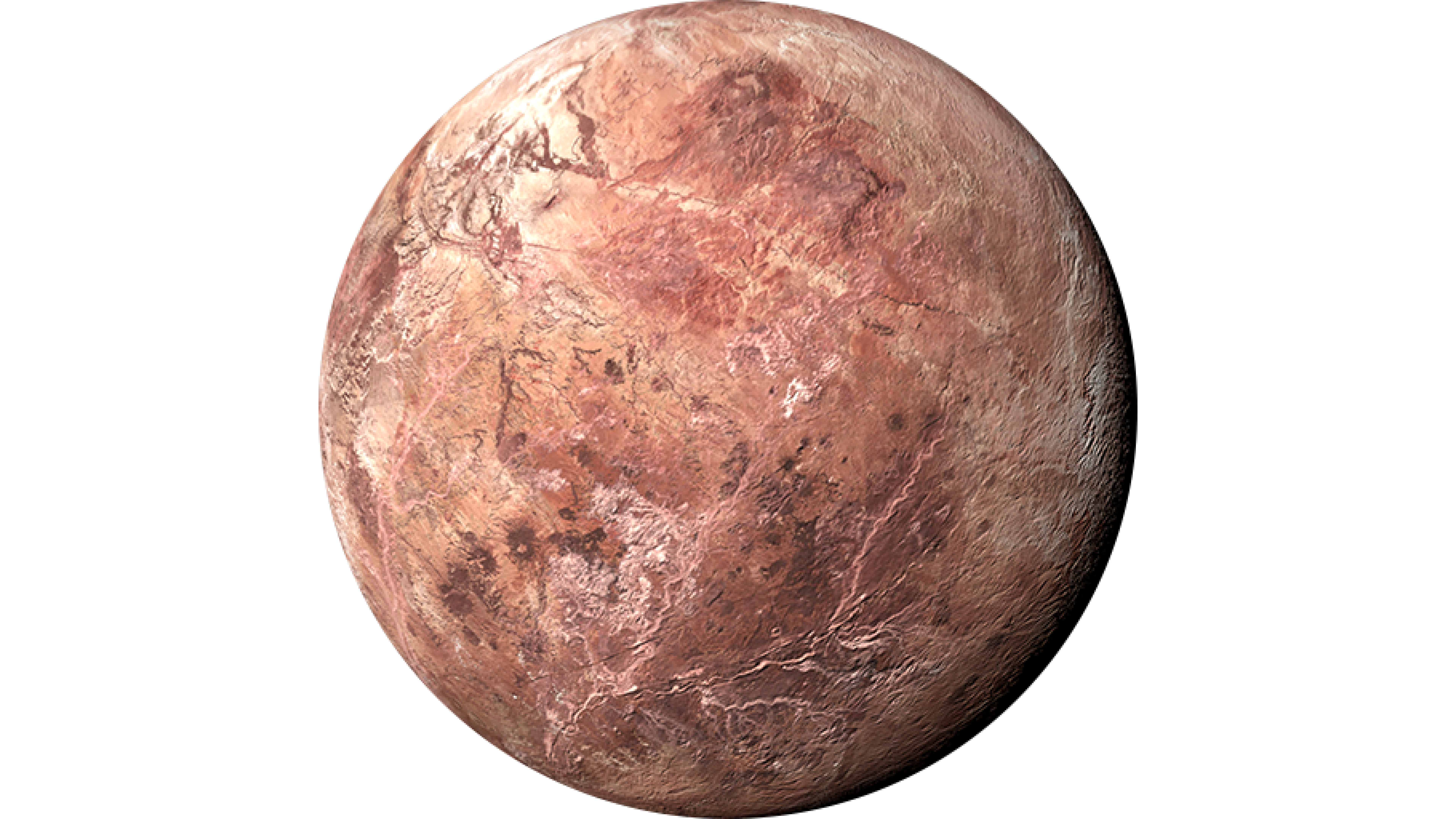
Let’s explore Makemake, another Kuiper Belt object and an interesting dwarf planet in the solar system :
Type : Makemake is a dwarf planet in the Kuiper belt, a region beyond Neptune’s orbit. It is mainly composed of rocks and ice.
Size : Makemake has an average radius of about 715 kilometres and a diameter of about 1,430 kilometres.
Mass : Its mass is estimated at about 0.00067 times that of the Earth.
Distance from the sun : Approximately 6.853 billion kilometres
Orbital period : Makemake takes about 309 Earth years to complete an orbit around the Sun.
Rotation : The rotation speed of Makemake on its axis is not precisely known.
Chemical composition : The exact composition of Makemake is not completely known, but it is believed that it is mainly composed of rocks and ice, with traces of organic compounds.
Structure : Makemake probably has a structure similar to that of other dwarf planets and objects in the Kuiper belt, with an ice crust and a rocky core.
Temperature : The surface temperatures of Makemake are extremely cold due to its great distance from the Sun, probably falling well below -200 degrees Celsius.
Makemake, with its frozen surface and remote position in the Kuiper belt, offers a fascinating insight into the distant worlds and transneptunian objects of the solar system. His study continues to provide valuable insights into the evolution and diversity of celestial bodies beyond Neptune.
Haumea
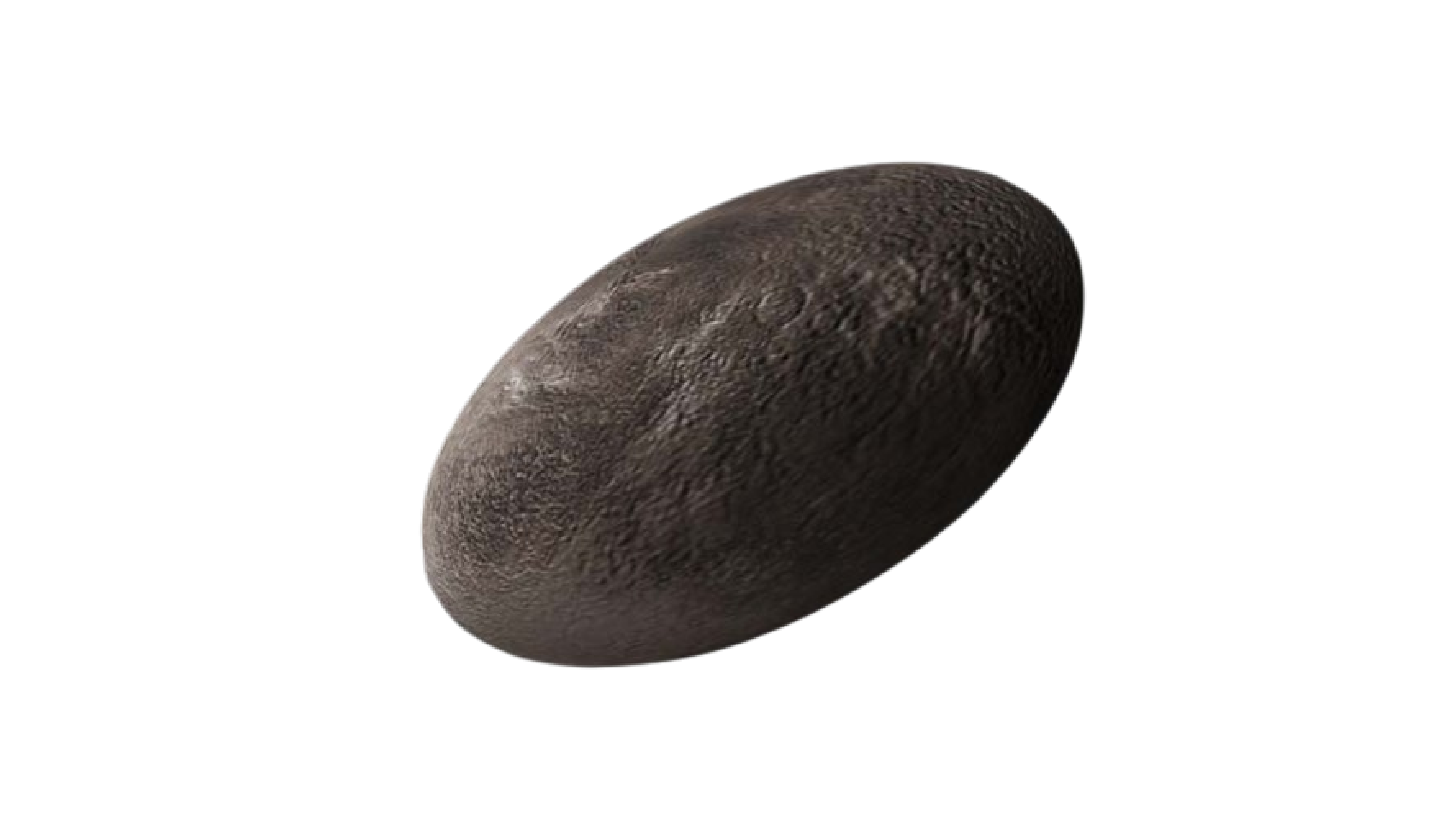
Let’s explore Haumea, another dwarf planet in the Kuiper belt, a system of dwarf planets and transneptunian objects beyond Neptune :
Type : Haumea is a dwarf planet in the Kuiper belt, characterized by its elongated shape, probably due to its rapid rotation.
Size : Haumea has an average radius of about 620 kilometres and a diameter of about 1,218 kilometres.
Mass : Its mass is estimated at about 0.00067 times that of the Earth.
Distance from the sun : Approximately 5.698 billion kilometres
Orbital period : About 5.698 billion milersHauméa takes about 283.3 Earth years to complete an orbit around the Sun.
Rotation : Haumea rotates on its axis in about 3.9 terrestrial hours, which is extremely fast compared to most other dwarf planets.
Chemical composition : The exact composition of Haumea is not completely known, but it is believed that it is mainly composed of rocks and ice, with traces of organic compounds.
Structure : Haumea probably has a structure similar to that of other dwarf planets and objects in the Kuiper belt, with an ice crust and a rocky core.
Temperature : The surface temperatures of Haumea are extremely cold due to its great distance from the Sun, probably falling well below -200 degrees Celsius.
Haumea, with its unusual shape and rapid rotation, offers a fascinating insight into transneptunian objects and the diversity of celestial bodies in the Kuiper belt. His study continues to provide valuable information on the history and evolution of the outer solar system.
Eris
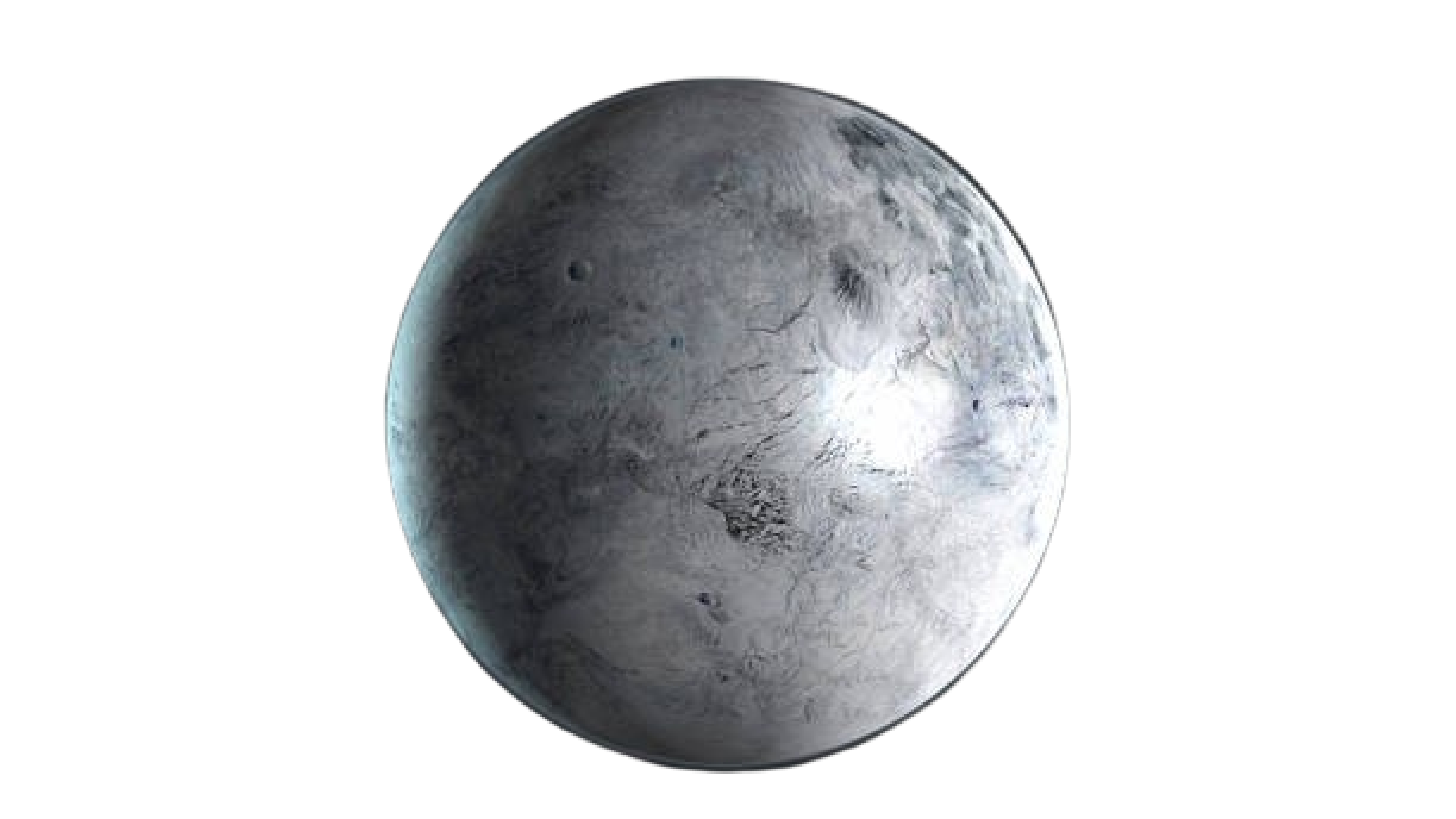
Let’s explore Eris, another object in the Kuiper Belt and a dwarf planet that has attracted great interest in astronomy :
Type : Eris is a dwarf planet in the Kuiper belt, located beyond Neptune. It is mainly composed of rocks and ice.
Size : Eris has an average radius of about 1,163 kilometres and a diameter of about 2,326 kilometres.
Mass : Its mass is estimated at about 0.0028 times that of Earth.
Distance from the sun : Approximately 5.698 billion kilometres
Orbital period : Eris takes about 558 Earth years to complete an orbit around the Sun.
Rotation : The exact rotation speed of Eris on its axis is not precisely known.
Chemical composition : The exact composition of Eris is not completely known, but it is believed that it is mainly composed of rocks and ice, with traces of organic compounds.
Structure : Eris probably has a structure similar to that of other dwarf planets and objects in the Kuiper belt, with an ice crust and a rocky core.
Temperature : Eris’s surface temperatures are extremely cold due to its great distance from the Sun, probably falling well below -200 degrees Celsius.
Eris, with its large size and eccentric orbit, has been at the center of many discussions on the classification of dwarf planets and the dynamics of the Kuiper belt. Its study continues to provide crucial information on the formation and evolution of the outer solar system.
MOONS
What is a moon ?
A moon is a celestial body that orbits a planet. Moons, also called natural satellites, are attracted to their planet by gravity and remain in orbit around it. The moons vary in size, composition and characteristics. Some moons are relatively small, rocky and irregular, while others may be much larger and have characteristics similar to those of planets, such as atmospheres or oceans. Moons can play an important role in planetary systems, influencing tides, stabilizing the rotation axes of planets and even potentially harboring conditions conducive to life.
Planets of the solar system containing moons
Mercury and Venus have no moon
Earth contains 1 moon :
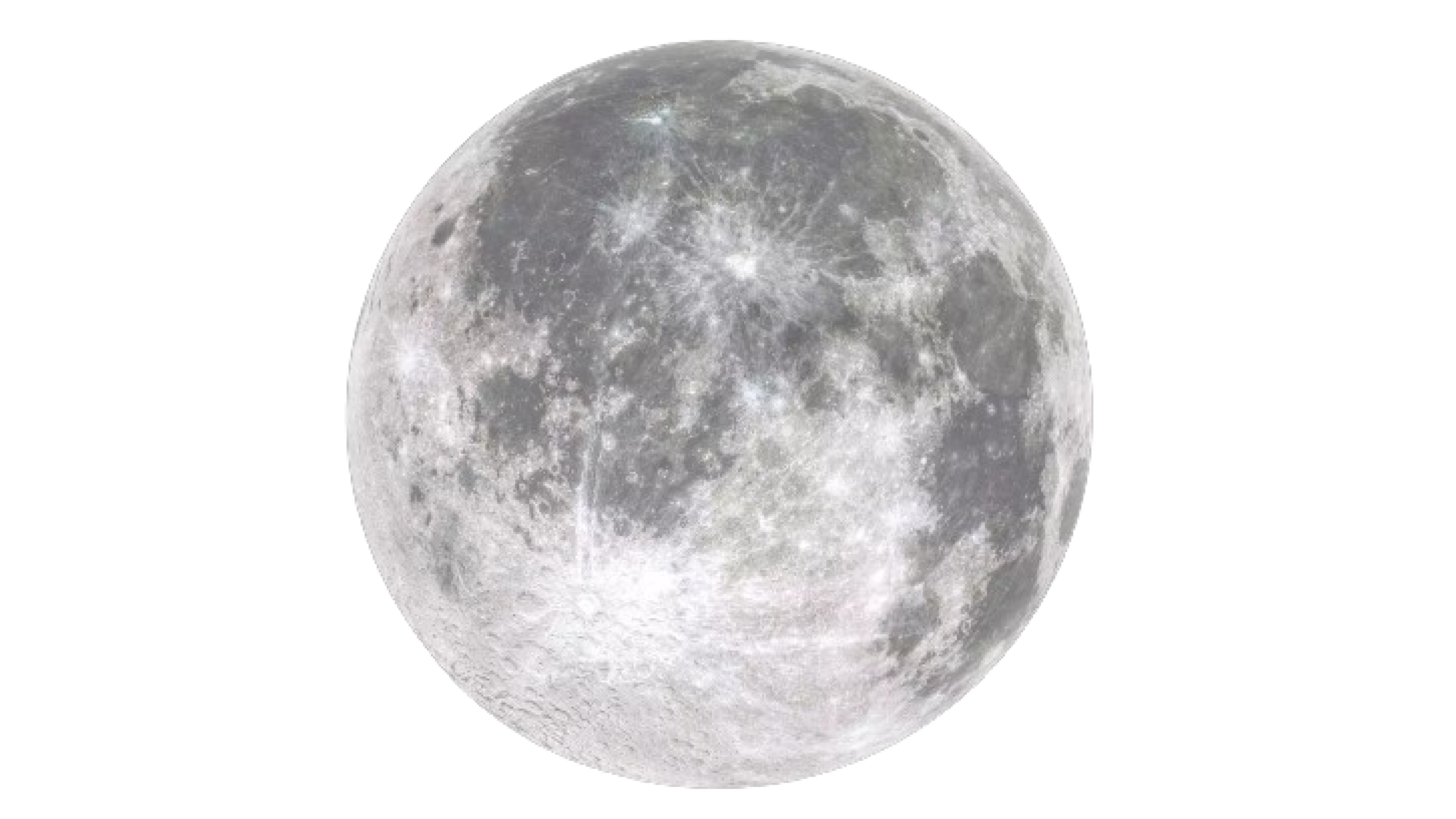
Name : Moon
Size : Approximately 3,474 km in diameter
Distance from the sun : Approximately 384 400 km
Orbital period : Approximately 27 days
orbital inclination : About 5 degrees from the ecliptic
The Moon always presents the same face to the Earth because of the synchronization of its rotation with its revolution around the Earth, a phenomenon called “synchronous rotation”
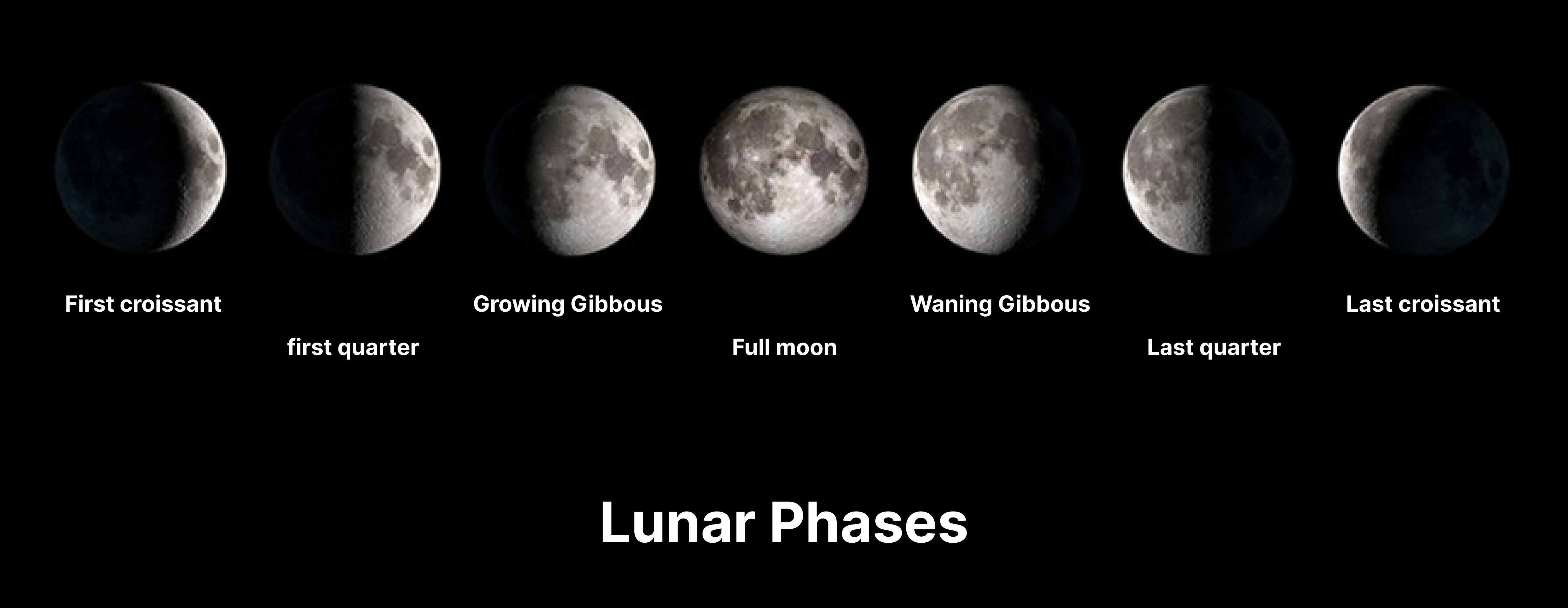
Moon Phases :
Mars contains 2 moons :
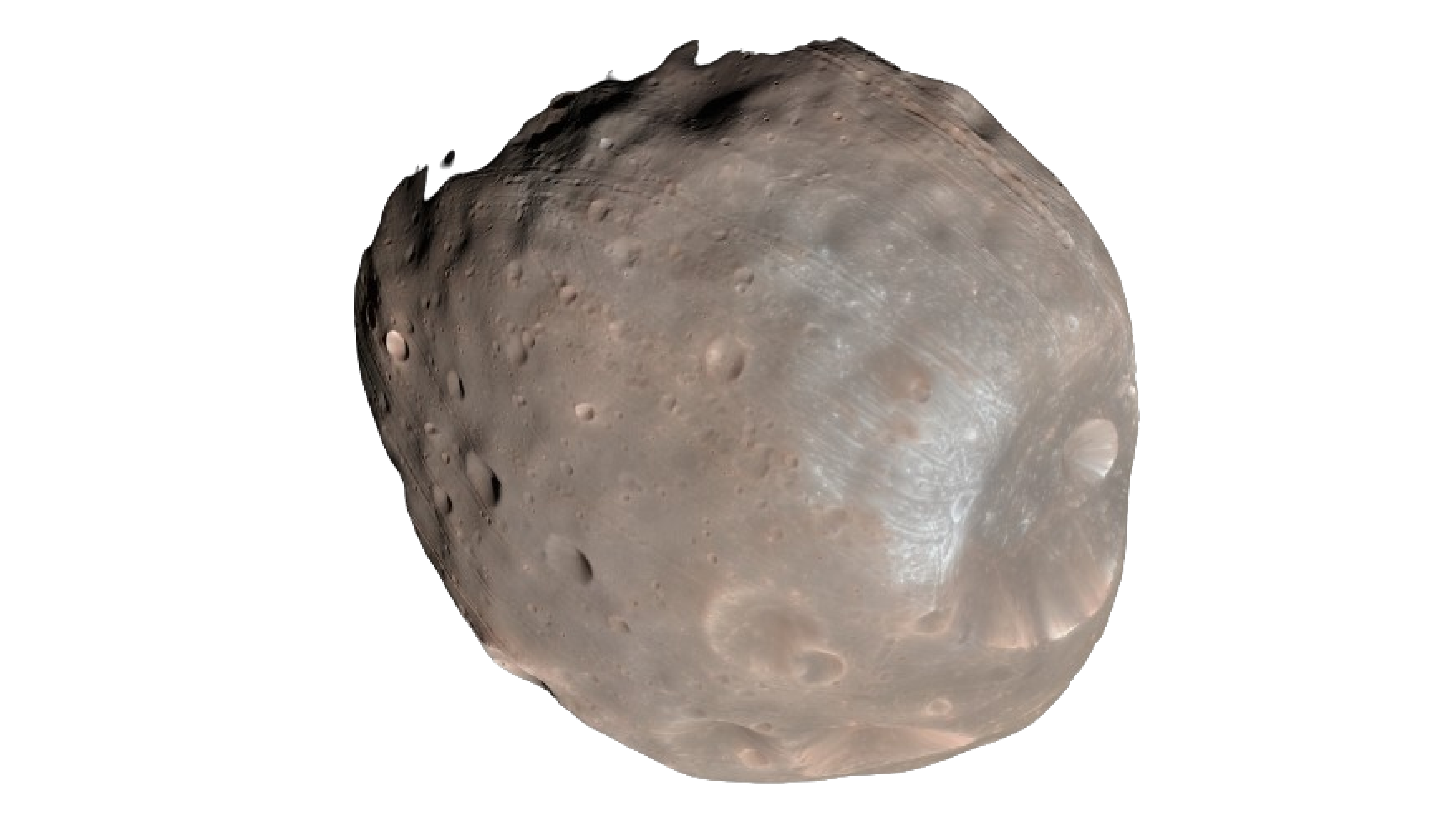
Name : Phobos
Size : Approximately 22.2 km in diameter
Distance from the Mars : Approximately 9,378 km
Orbital : About 7 hours and 39 minutes
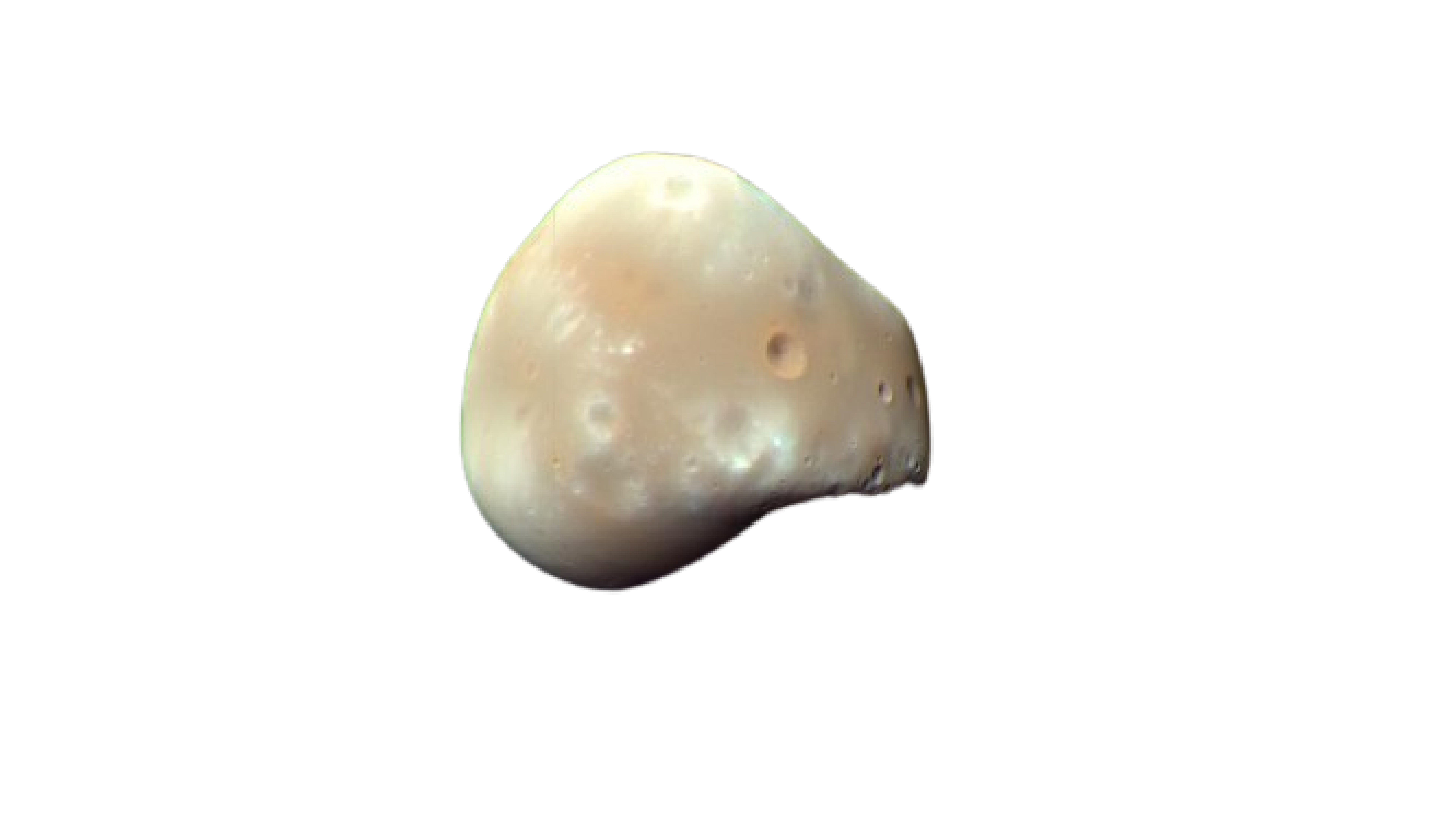
Name : Deimos
Size : Approximately 12.4 km in diameter
Distance from the Mars : Approximately 23,460 km
Orbital : Approximately 30 hours and 18 minutes
Jupiter contains more than 80 moons including the best known :
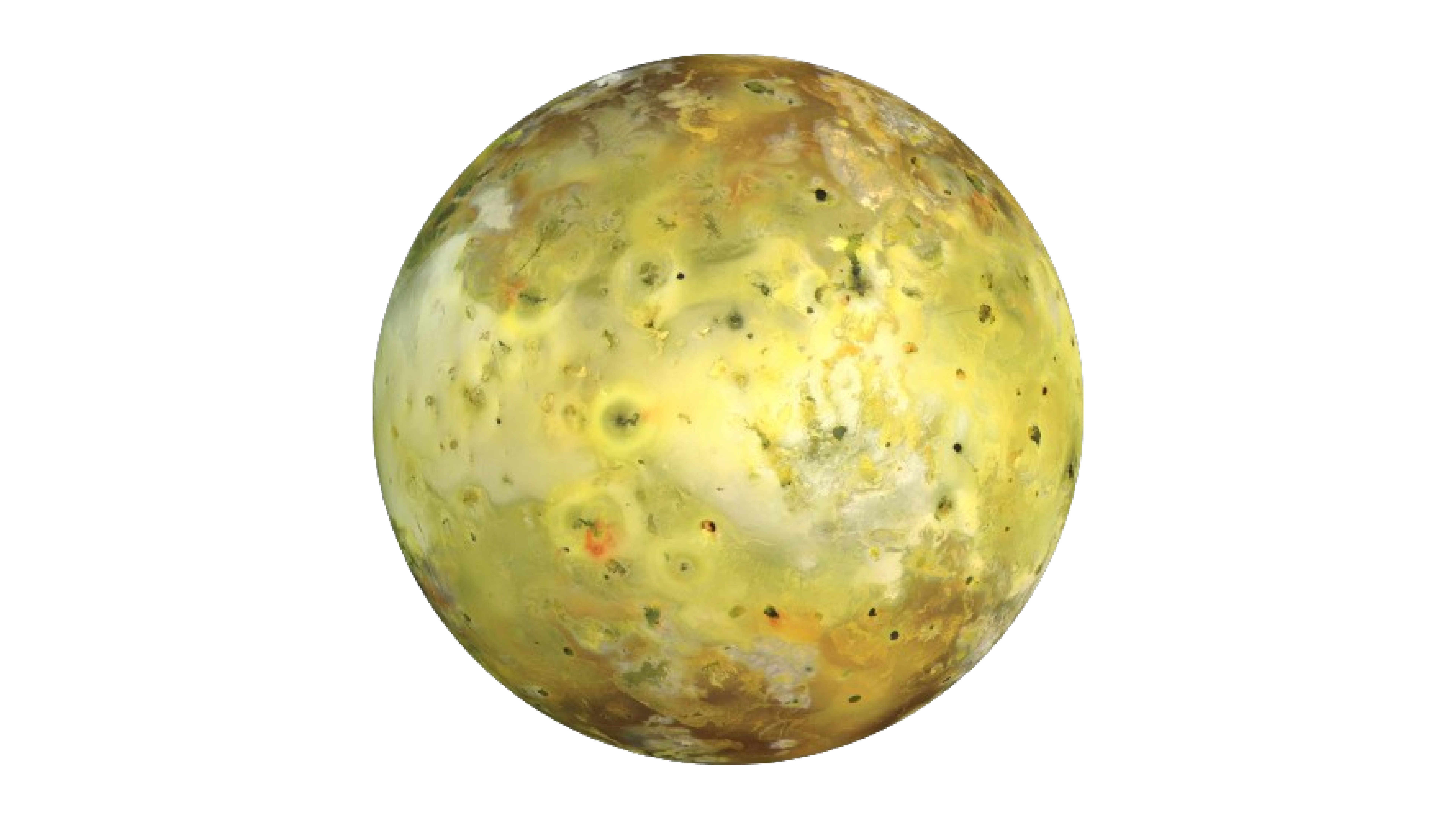
Name : Io
Size : Approximately 3,643 km in diameter
Distance from the Jupiter : Approximately 421,700 km
Orbital : Approximately 1.77 Earth days (42.5 hours)
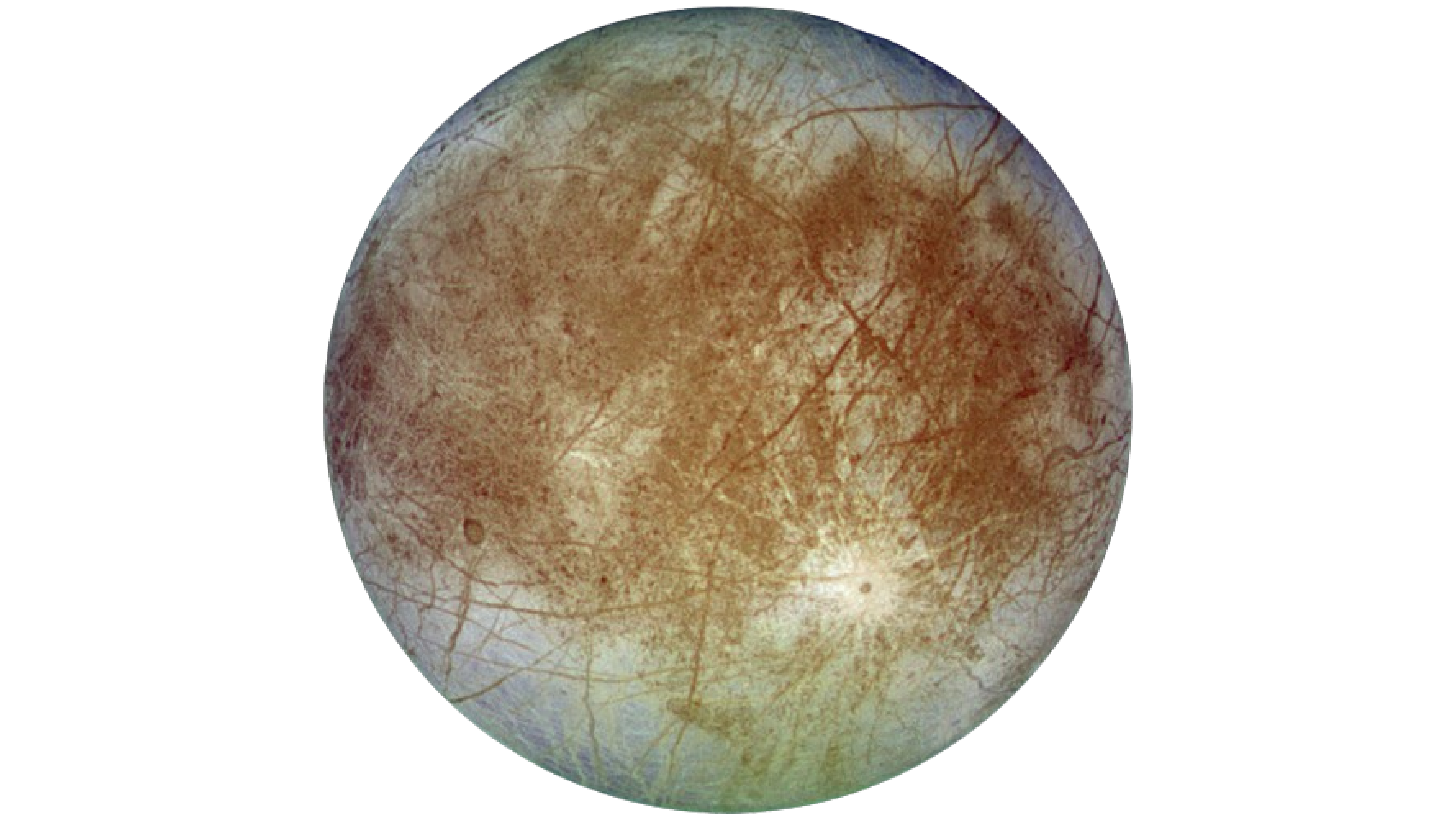
Name : Europe
Size : Approximately 3,121 km in diameter
Distance from the Jupiter : Approximately 671,034 km
Orbital : Approximately 3.55 Earth days (85.2 hours)
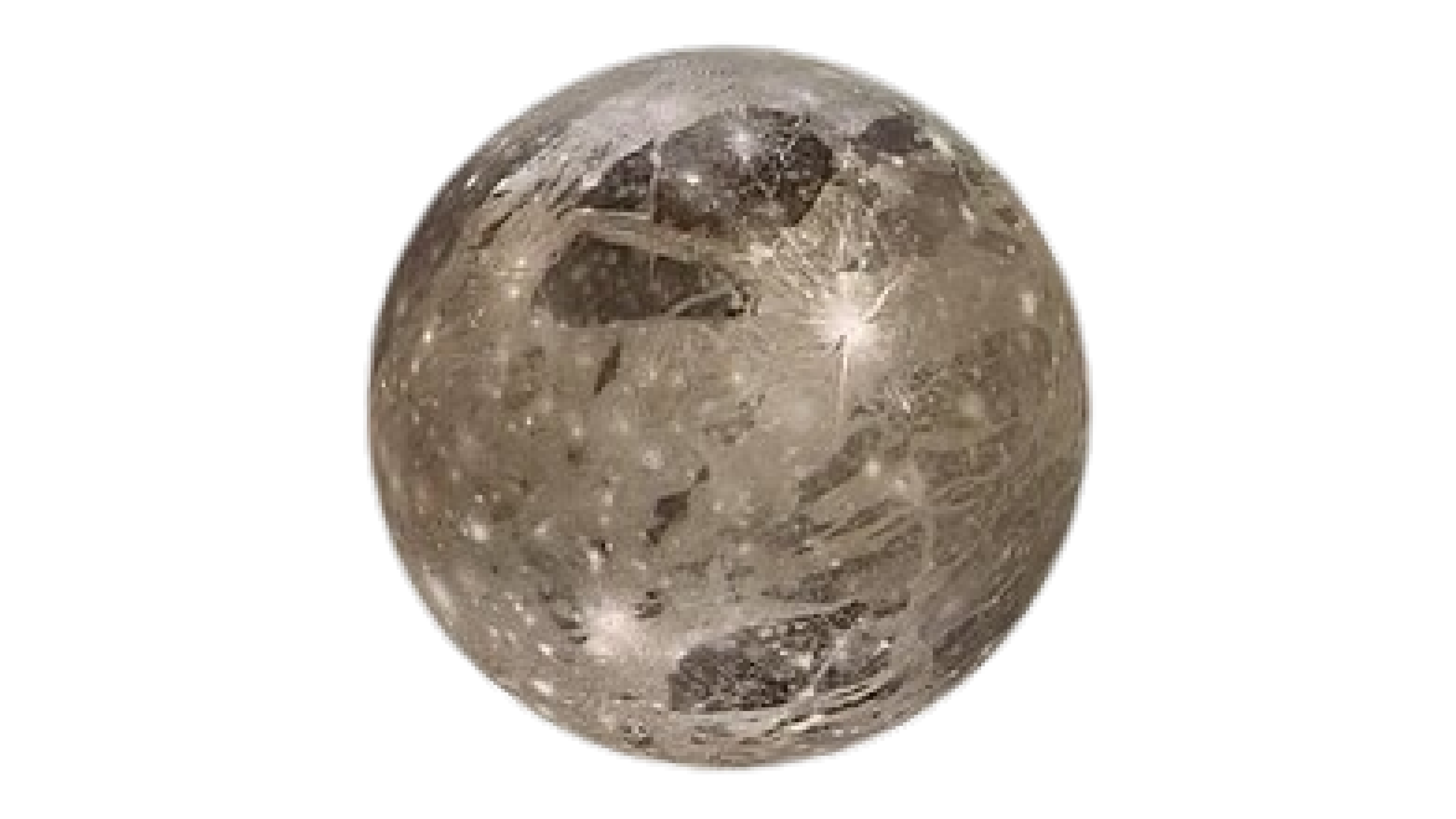
Name : Ganymède
Size : Approximately 5,268 km in diameter
Distance from the Jupiter : Approximately 1,070,412 km
Orbital : Approximately 7.15 Earth days (171.7 hours)
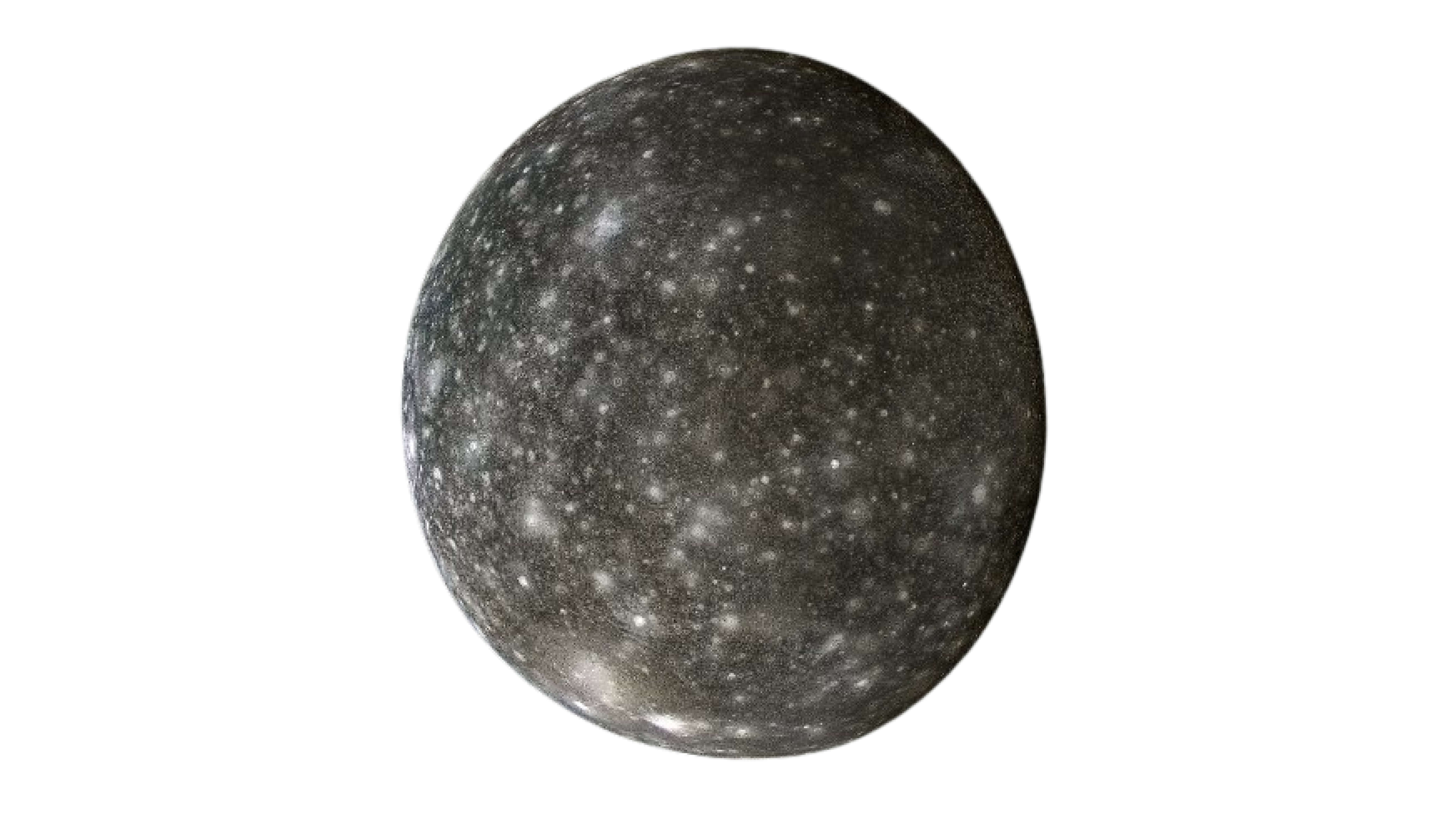
Name : Callisto
Size : Approximately 4,821 km in diameter
Distance from the Jupiter : Approximately 1,882,709 km
Orbital : Approximately 16.7 Earth days (400.6 hours)
Saturn contains more than 80 moons including the best known :
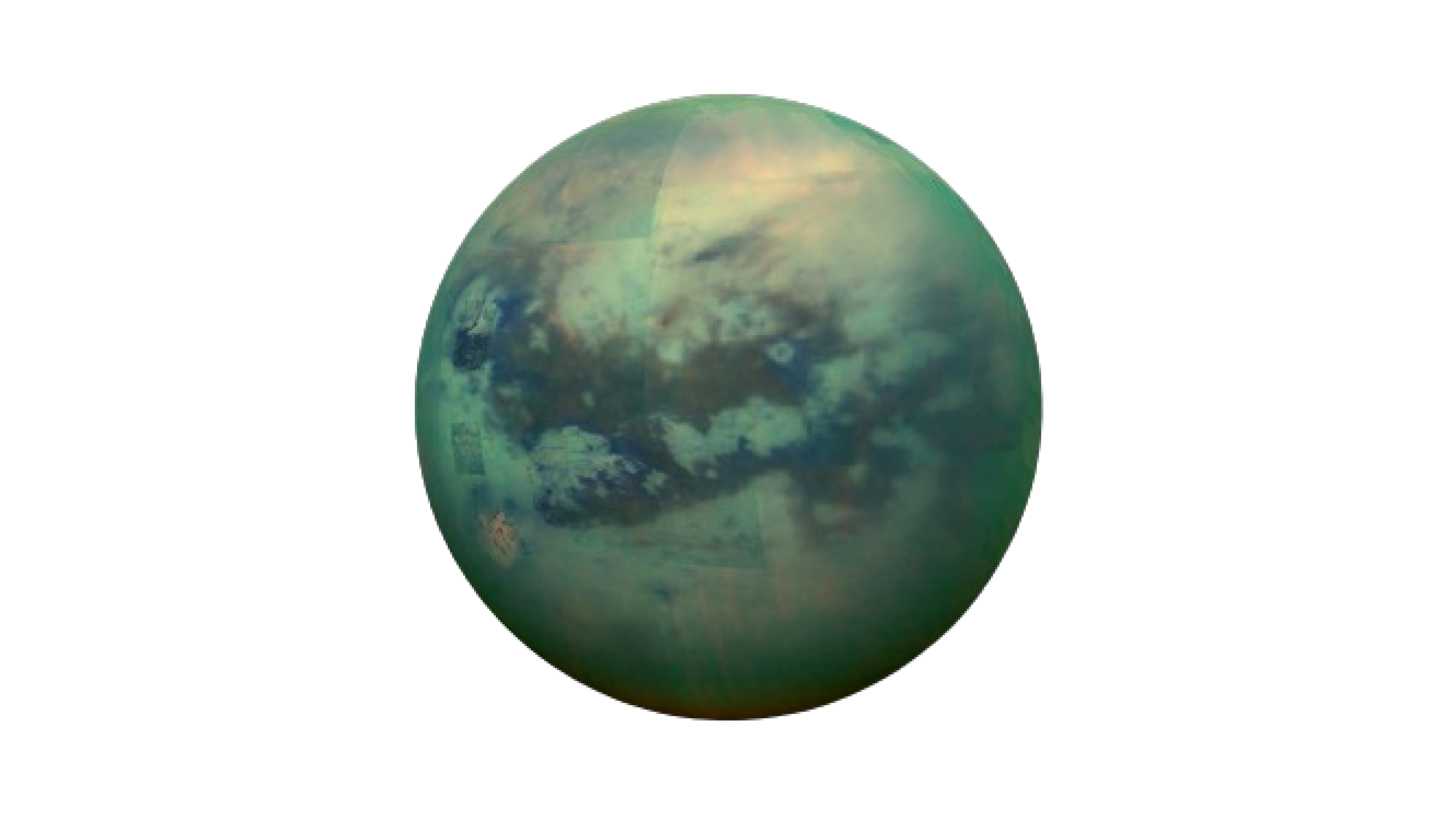
Name : Titan
Size : Approximately 5,149 km in diameter
Distance from the Saturn : Approximately 1,221,870 km
Orbital : Approximately 15.95 Earth days (382.7 hours)
Uranus contains more than 27 moons including the best known :
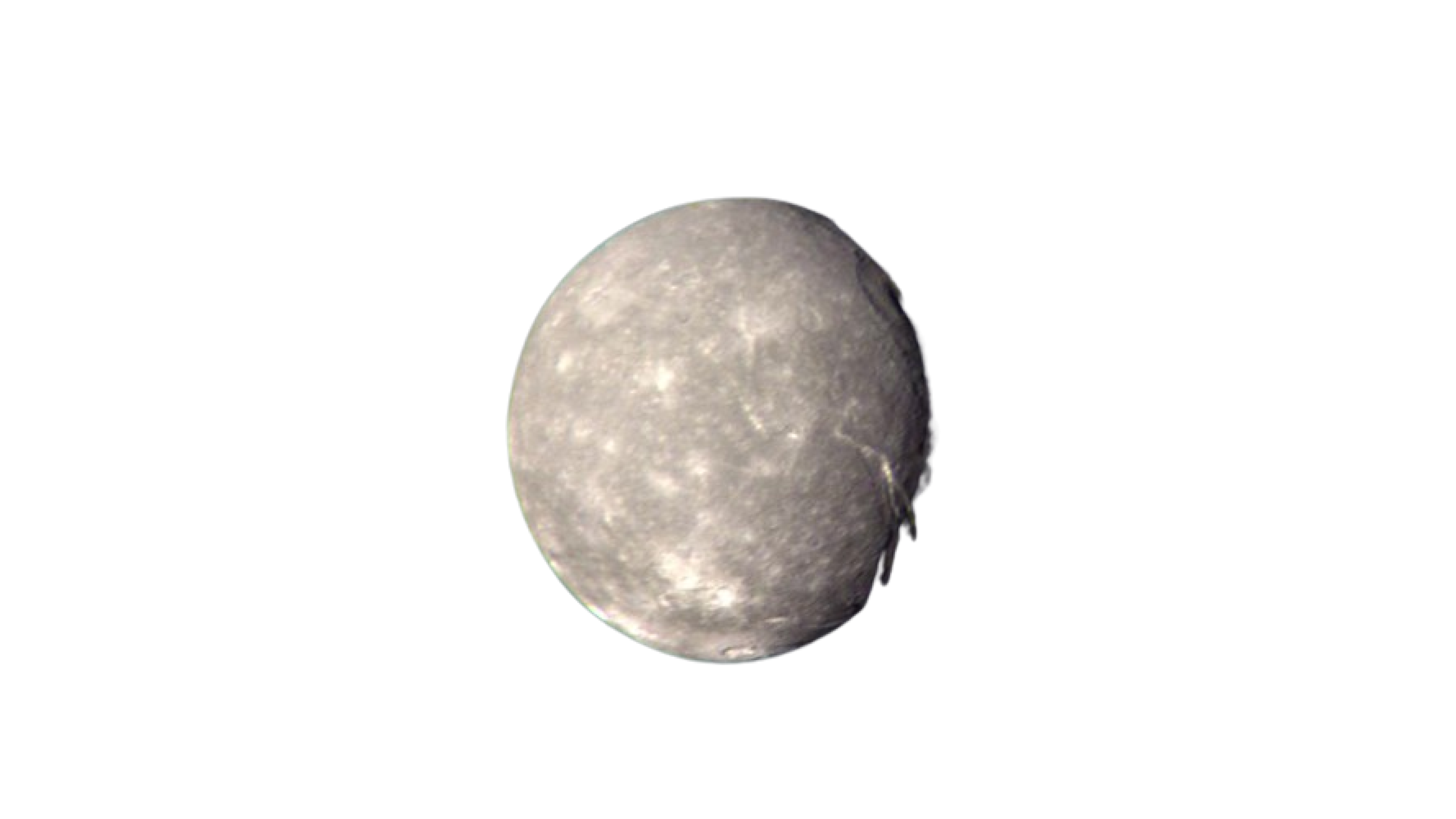
Name : Titania
Size : Approximately 1,578 km in diameter
Distance from the Saturn : Approximately 435 910 km
Orbital : Approximately 8.7 Earth days (208.8 hours)
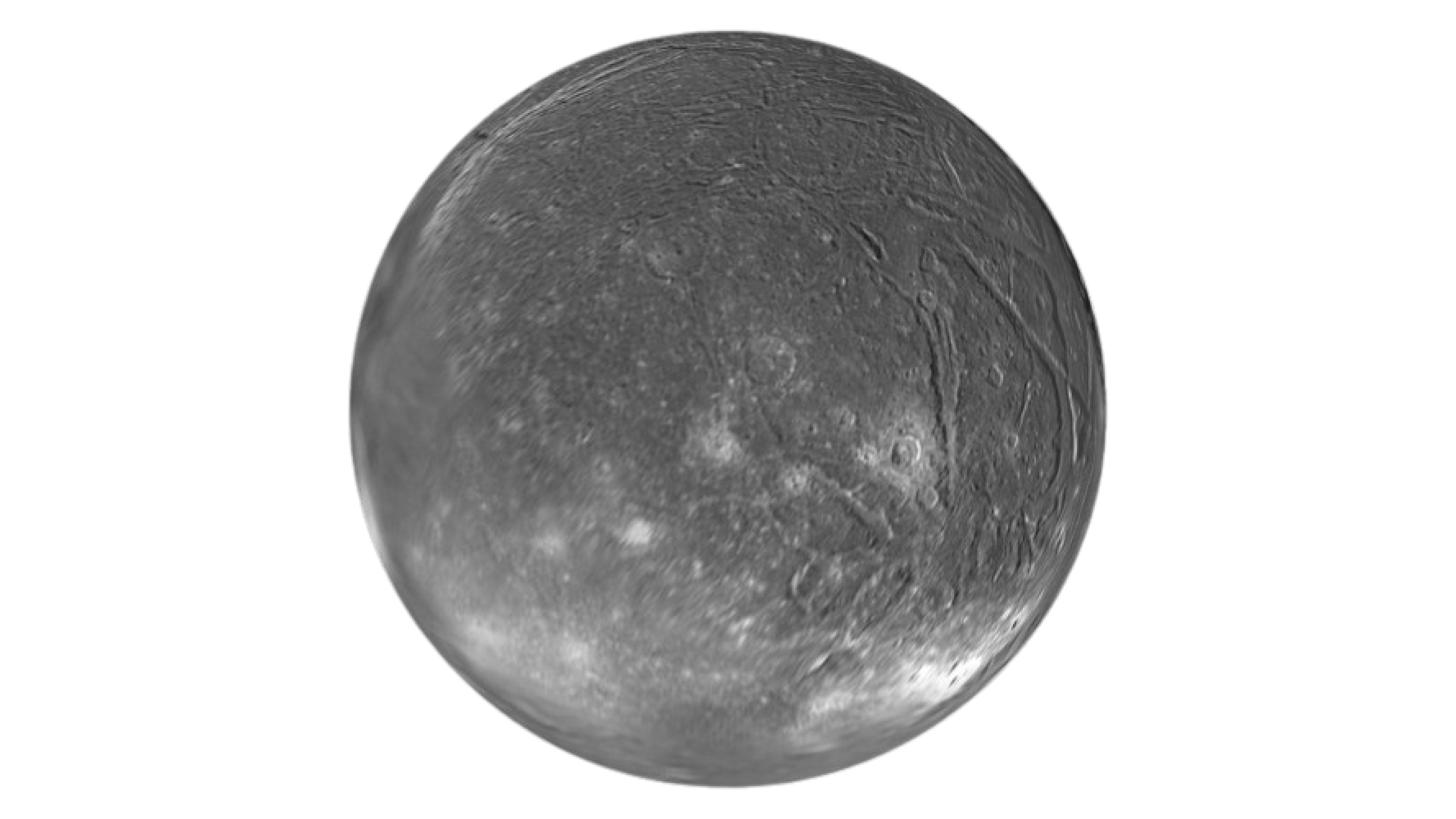
Name : Ariel
Size : Approximately 1,157 km in diameter
Distance from the Uranus : Approximately 191,020 km
Orbital : Approximately 2.5 Earth days (60.4 hours)
Neptune contains more than 14 moons including the best known :
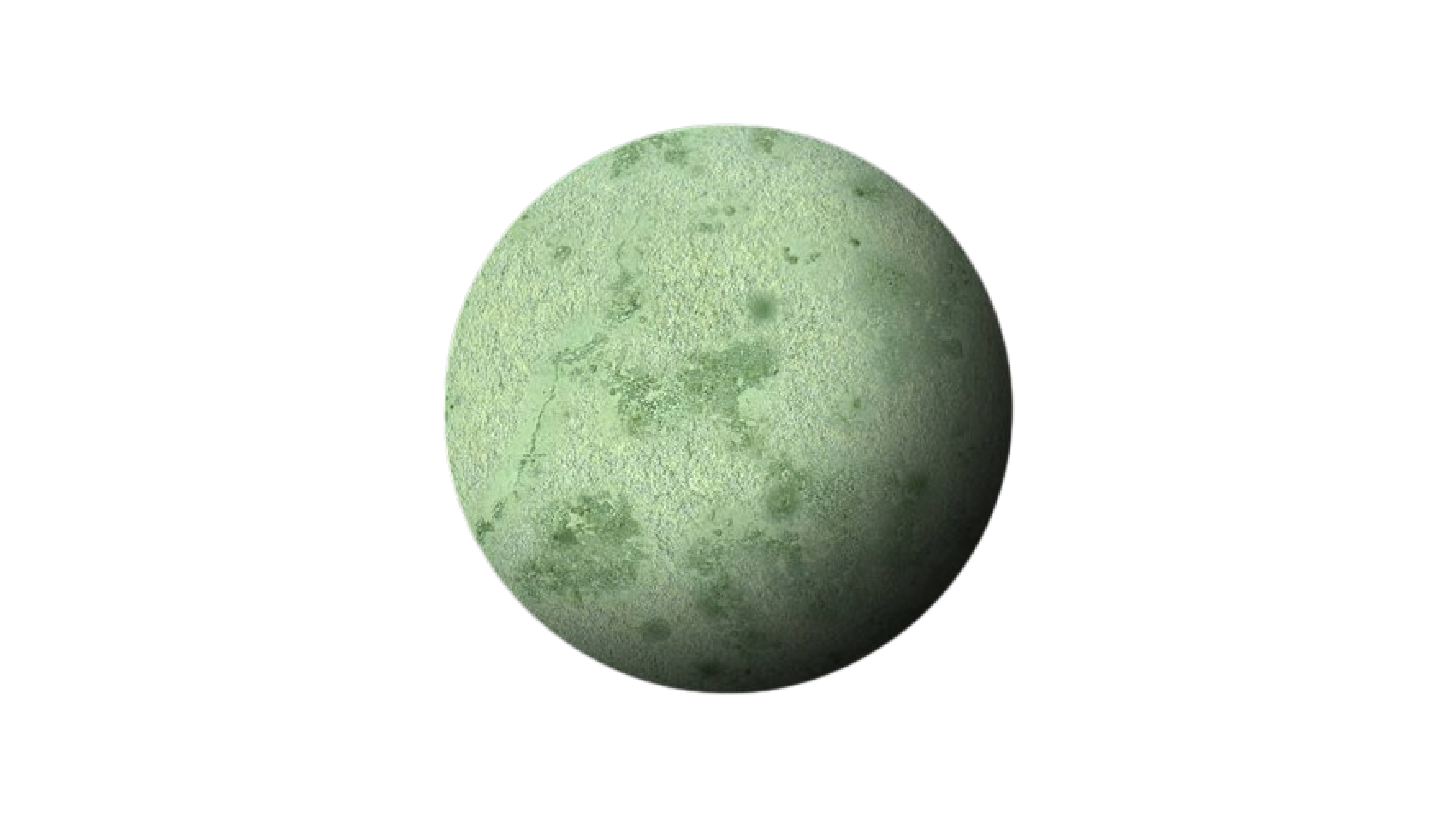
Name : Triton
Size : Approximately 2,706 km in diameter
Distance from the Neptune : Approximately 354 800 km
Orbital : Approximately 5.88 Earth days (141.1 hours)
CELESTIAL OBJECTS
What is a celestial object ?
A celestial object is any body or entity located beyond the Earth’s atmosphere and observable from Earth or space. These objects include a wide range of astronomical elements, such as planets, stars, galaxies, nebulae, asteroids, comets, moons, neutron stars, black holes, pulsars, and many others.
Each of these celestial objects can vary enormously in size, mass, composition, brightness and behavior. For example, planets are spherical celestial bodies that orbit a star, while stars are luminous spheres of gas that produce their own light through nuclear fusion. Galaxies are vast systems of billions of stars and other celestial objects, held together by gravity.
Celestial objects are often studied by astronomers to better understand the universe, its origin, evolution and complex phenomena. Advances in astronomical observation, such as the use of terrestrial and space telescopes, as well as space probes and satellites, have allowed many fascinating celestial objects to be discovered and explored and a better understanding of our place in the universe.
Information on celestial objects :
Asteroids
Asteroids are small rock bodies that orbit the Sun. Here is some information about asteroids :
Size and Composition : Asteroids vary considerably in size, ranging from a few meters to several hundred kilometers in diameter. Most asteroids are composed of rocks and metals, although some may also contain volatile materials such as water ice or carbon dioxide.
Asteroid Belt : Most asteroids orbit in the asteroid belt, a region between the orbits of Mars and Jupiter. This is the main concentration of asteroids in our solar system, although asteroids can also be found elsewhere.
Origin : Asteroids are often considered remnants of the formation of the solar system around 4.6 billion years ago. They are the unconsolidated remnants of the early solar nebula that were not massive enough to form planets.
Observation and Study : Asteroids are often studied by astronomers to better understand the formation and evolution of the solar system. Space missions have been launched to closely study some asteroids, such as NASA’s OSIRIS-REx mission, which collected a sample of asteroid Bennu in 2020.
Risk of Collision : Some asteroids, especially those that cross Earth’s orbit, may pose a risk of collision with our planet. Although the probability of a collision is generally low, monitoring and research on potentially dangerous asteroids is important for global safety.
Diversity : Asteroids have a wide variety of shapes, sizes and compositions. Some have very elliptical orbits, while others orbit closer to the Sun.
In summary, asteroids are fascinating celestial objects that provide valuable information about the early stages of the history of our solar system.
Comets
Comets are celestial objects made up mainly of ice, dust and rock, orbiting the Sun on very elliptical trajectories. Here is some general information about comets :
Composition : Comets are mainly composed of water ice, carbon dioxide (CO2) ice, methane ice (CH4), as well as dust and rocks. When a comet approaches the Sun, solar heat vaporizes these materials, creating a temporary atmosphere called a coma, which can be spread over millions of kilometers, and a luminous tail that extends in the opposite direction to the Sun.
Orbital : The orbits of comets are generally very elliptical, causing them to approach the Sun considerably during their perihelion (point closest to the Sun) and to move away towards the ends of the solar system during their aphelion (point furthest from the Sun). Some comets have periodic orbits, returning regularly around the Sun, while others have periodical orbits and can be observed only once.
Observation : Comets are often observed from Earth as they approach the Sun and become visible in the night sky. Terrestrial observers can often see the coma and tail of a comet using telescopes or even with the naked eye under good observation conditions. Space missions were also sent to closely study comets, including NASA’s Stardust and ESA’s Rosetta missions.
Life cycle : Comets are often classified into two main categories: long-lived comets, which have orbital periods of several centuries or more, and short-lived comets, which regularly return around the Sun in a few years or decades. With each passing near the Sun, comets gradually lose their volatile material, which means they can only survive for a number of passes before completely disintegrating or losing their distinctive cometary character.
Origin : Comets are often considered remnants of the formation of the solar system, retaining the primitive materials that were present during the formation of the solar system about 4.6 billion years ago. Their study can therefore provide valuable information on the conditions and processes that prevailed at that time.
In short, comets are fascinating and dynamic objects of our solar system, offering astronomers and scientists a window into the origins and evolution of our solar system and the universe as a whole.
Nebulae
Nebulae are vast clouds of gas and dust in interstellar space. Here is some general information about nebulae :
Composition : Nebulae are mainly composed of gases, mainly hydrogen, but they also contain varying amounts of interstellar dust and other chemical elements. Nebulae may also contain traces of ionized gas, which often makes them visible in certain wavelengths of light.
Types of Nebulae : There are several main types of nebulae, each with its own characteristics and origins. Diffuse nebulae are vast clouds of gas and dust, often the place of star formation. Planetary nebulae are clouds of ionized gas emitted by dying stars, while dark nebulae are dense clouds of interstellar dust that obscure the light of objects behind them.
Formation and Evolution : Nebulae are formed from the gravitational collapse of large regions of gas and dust in the interstellar medium. As these regions contract, they can form stars within them. Newly formed stars emit stellar light and wind, which can ionize the surrounding gas and create bright nebulae.
Observation : Nebulae are often observed through optical telescopes and in different wavelengths of light, including visible light, infrared radiation and radio waves. Observations at different wavelengths give astronomers a better understanding of the composition, structure and dynamic processes within nebulae.
Role in the Star Formation : Nebulae are often the place of star formation. As matter accumulates in a shrinking nebula, it can form nuclei of gas and dust that eventually become stars. Nebulae therefore provide the necessary environment for the birth of new stars.
In short, nebulae are fascinating elements of our cosmos, playing a crucial role in the formation and evolution of stars and galaxies. They are also important objects of study for astronomers seeking to understand the physical and chemical processes that govern the universe.